Anastacia Dwyer
ABOUT THE PROJECT
If you’ve ever use a self checkout you likely know the frustrating experience of being stopped, having to wait for an associate, and likely not know what caused the issue in the first place. In the current state, Kroger's self checkout system has over 80 different types of those stops. It was determined in preliminary research studies with real customers that the most frustrating part of self checkout is running into an intervention or hard stop where you need associate assistance.
With the development of Kroger's Next Generation Point of Sale, there was a sizable opportunity area improving this experience.
The Research Plan: Stakeholder Input
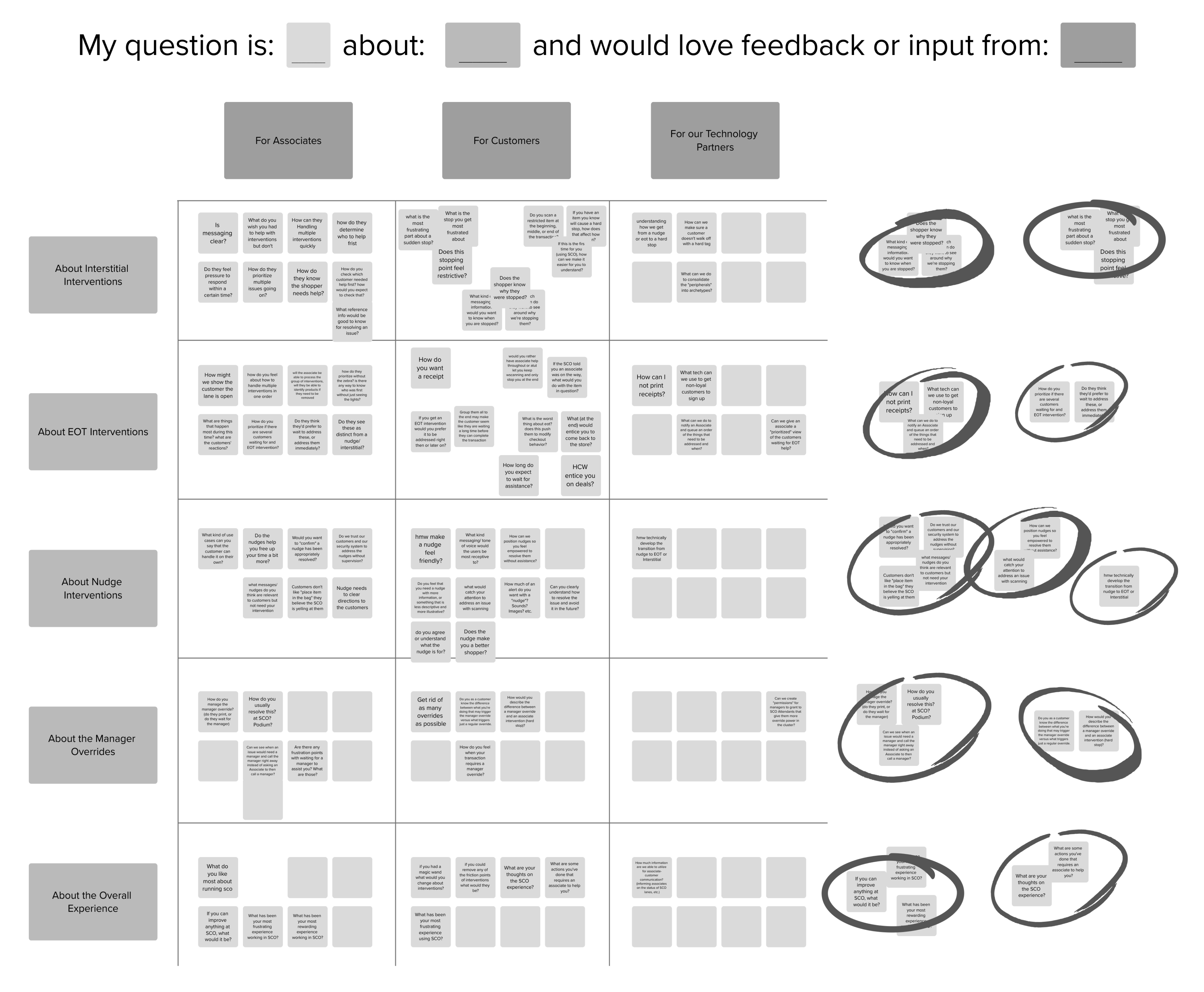
I wanted to involve our internal stakeholders in this effort early on so I gathered representatives from retail ops, architecture, tech partners, product, and design to see what our initial questions for users would be and if we had any opportunity areas in mind already.
Using a matrix we mapped out the questions we had on axis indicating question types and who it would be best to ask.
Methodology: Quantitative and Qualitative Feedback
Quantitative Survey
I began with affinity mapping similar questions from the stakeholder session into groups and themes. I found that we had questions around what information customers might find useful when running into a stop, how customers would prefer to be stopped when it’s necessary, and what areas are most frustrating to them when they are stopped in the current experience.
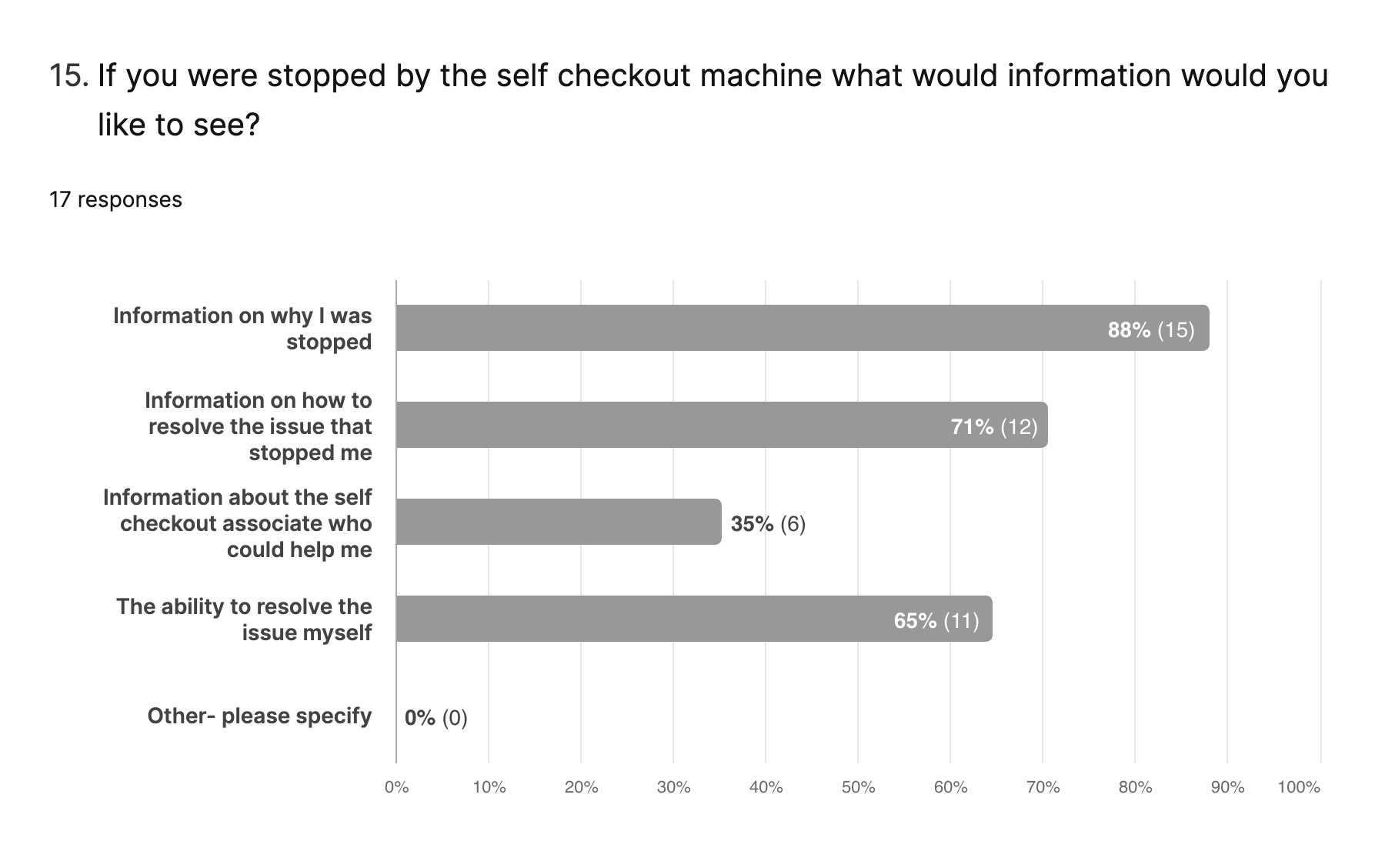
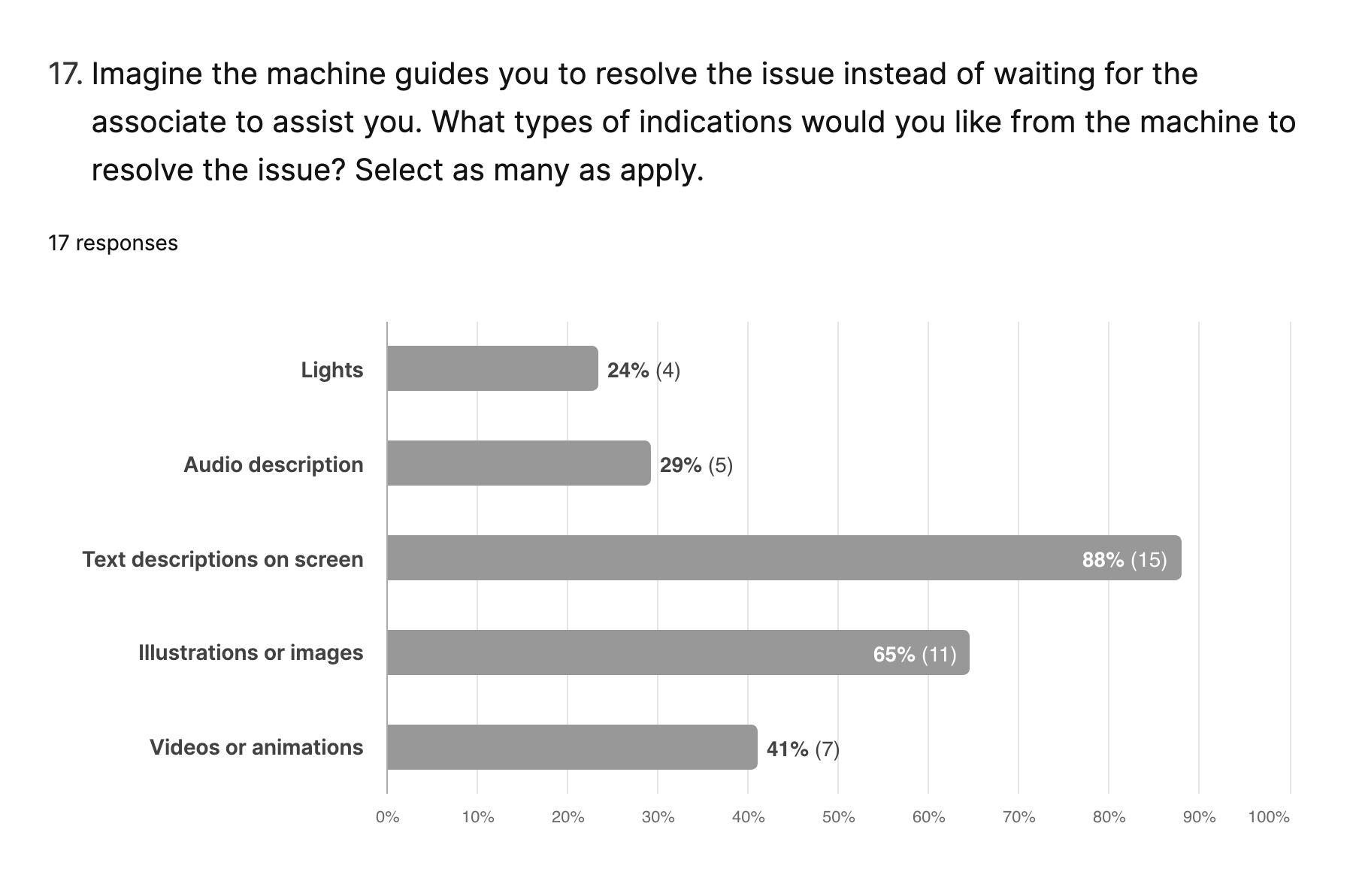
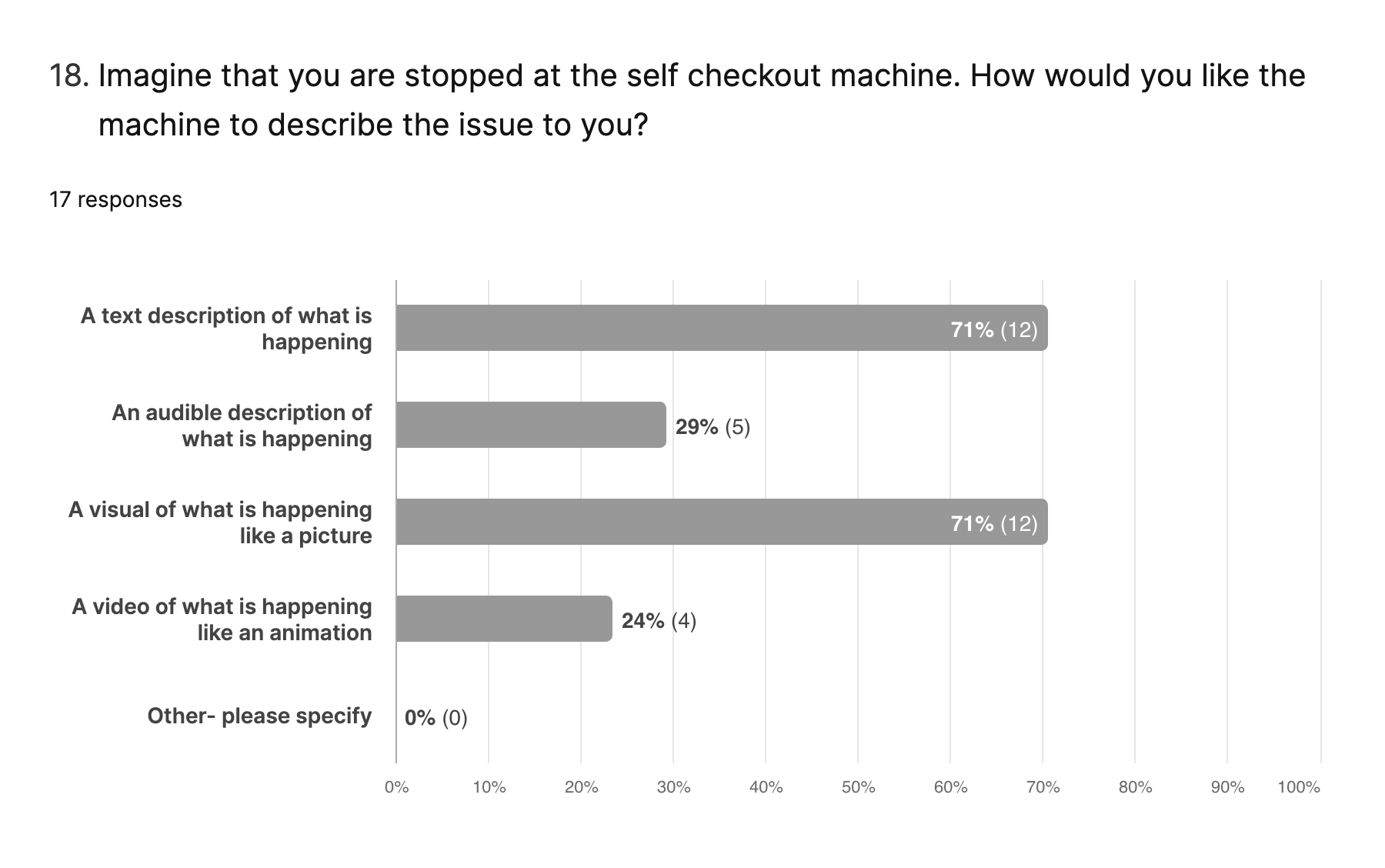
*Example survey responses
User Panel
Next, I partnered with a user researcher (thank you Annesleigh Hendrix!) to pull together a 5 person customer panel. We structured the panel sessions into four sections: general customer experience survey, intervention questions, manager override questions, and a live usability test.
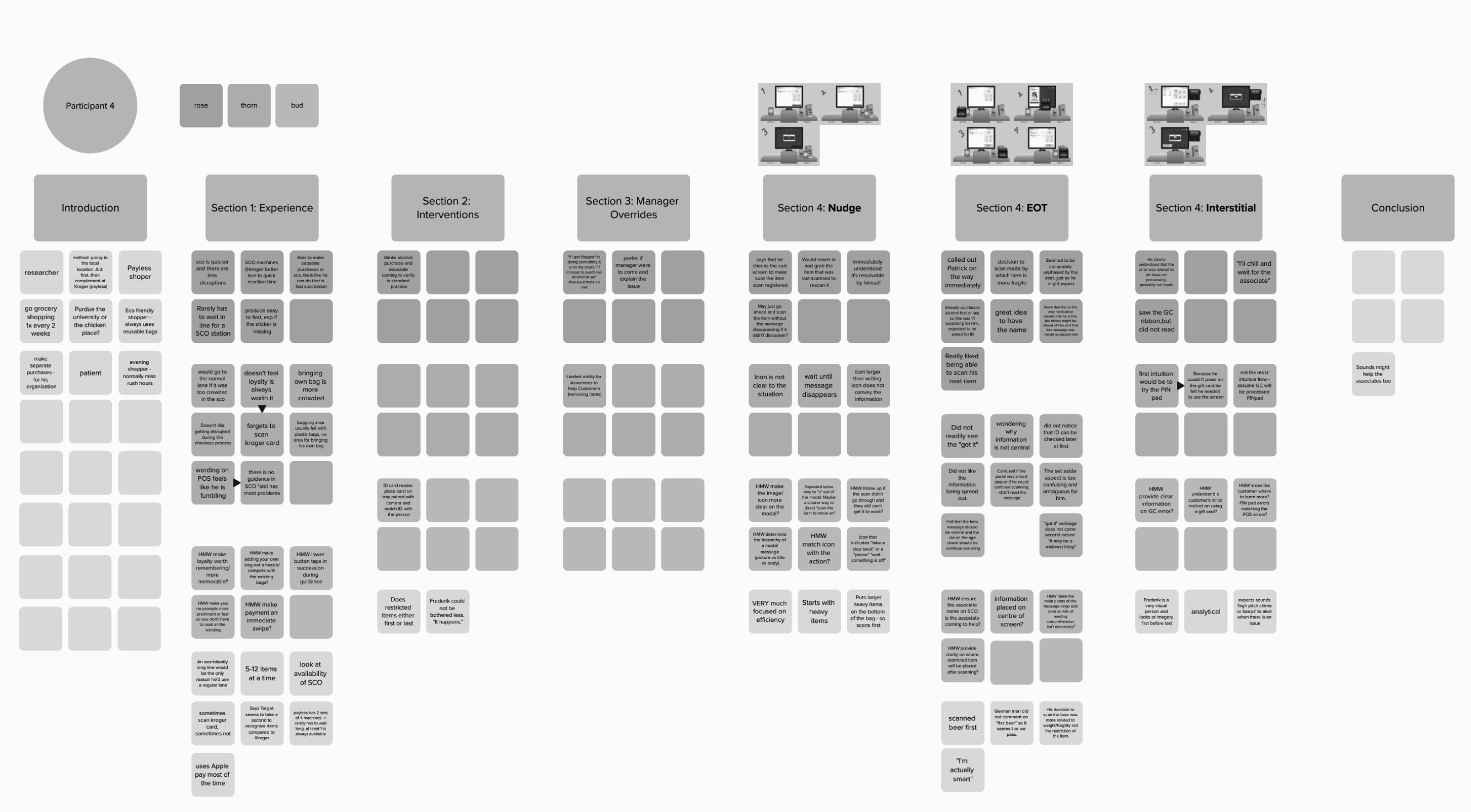
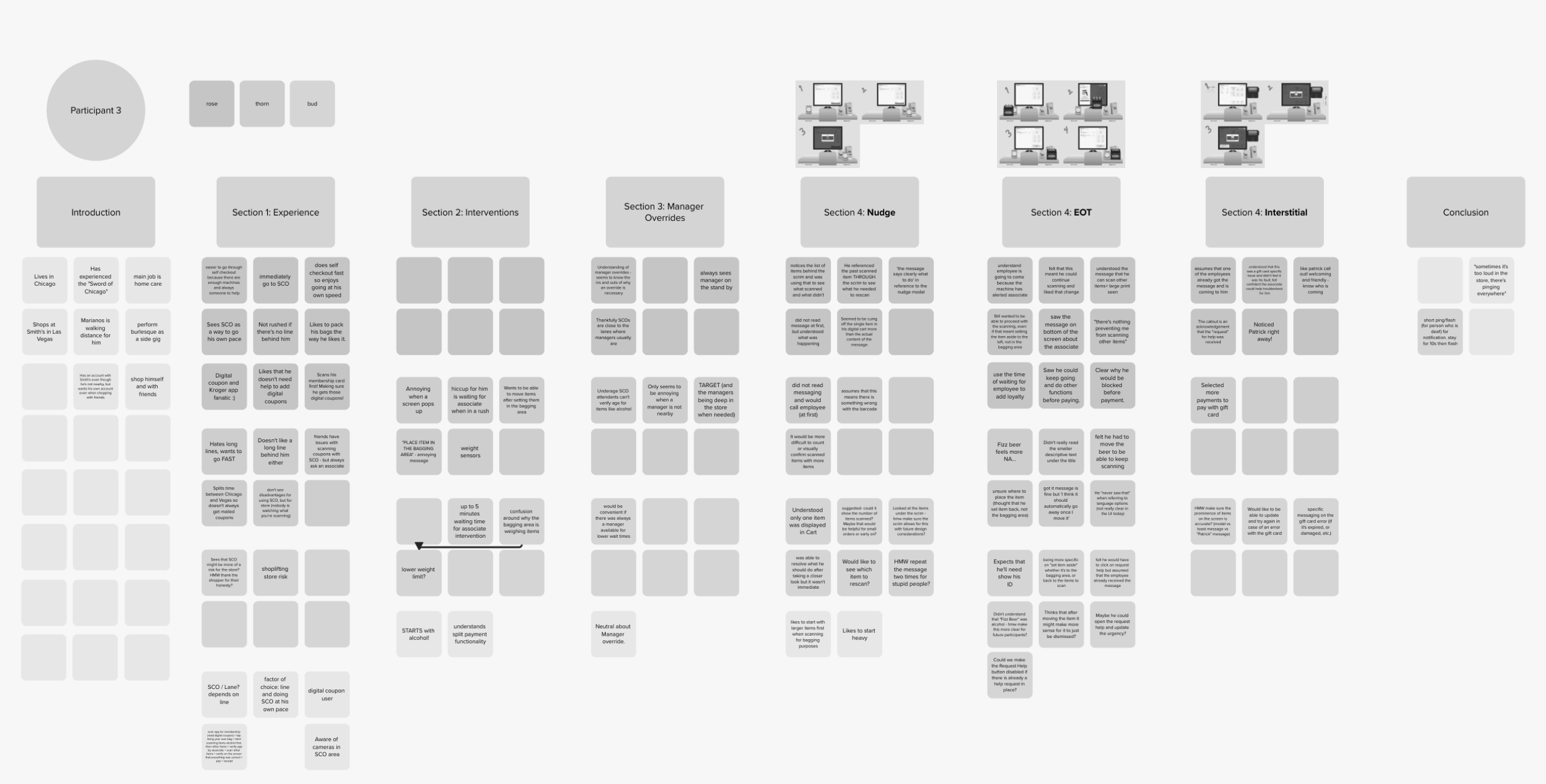
*Example panel participant notes
The Prototype
To best attempt to accommodate the physicality of the self checkout, I built the UI prototypes into an interactive self checkout terminal to allow customers to interact with product scanning, a bagging area, and payment types with the PIN Pad.
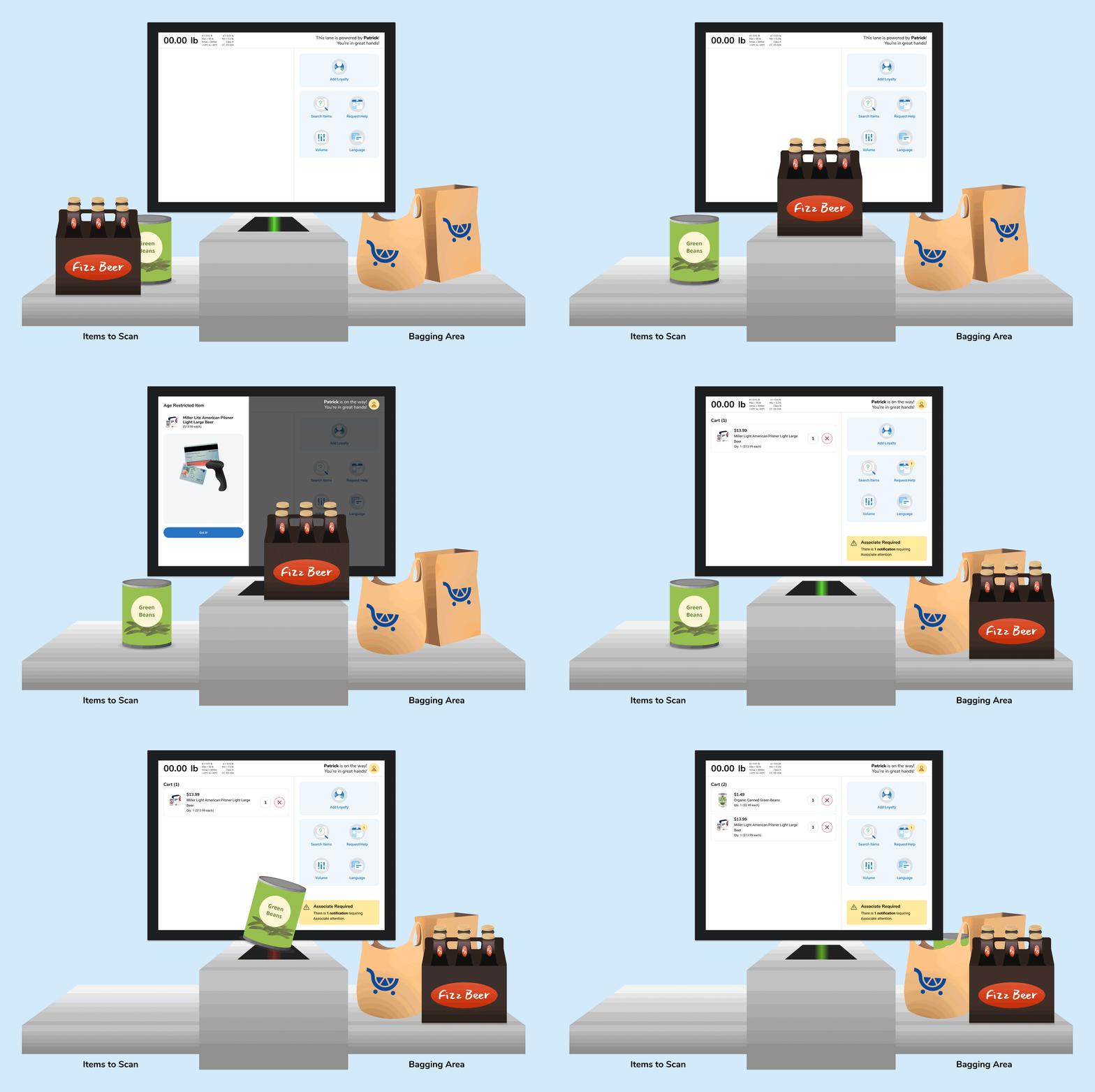
Sorting Findings: Emerging Concepts
Interventions by Type
Both the survey and customer panel confirmed our hypothesis that customers want more autonomy at self checkout. Although the self checkout cannot remove security measures, I hypothesized that reformatting the patterns for customer assistance could improve the customers experience and reduce the volume of assistance needed from associate at any given moment (thus reducing wait times).
Reformatting the structure of these stops to would mean there were 3 defined paths for customer resolution within the self checkout experience at Kroger.
Introducing nudges or soft stops allow the self checkout machine to provide additional guidance to the customer in scenarios in which customers can self resolve. Introducing end of transaction interventions or queued stops allows customers the autonomy to keep scanning when associates are needed. An associate is still required but this interaction can take place any time before they finalize their transaction. This reduces unnecessary wait time, placing autonomy back in the hands of customers. Remaining stops would be limited to the traditional hard stops wherein it is in the best interest of the customer to receive assistance directly right away.
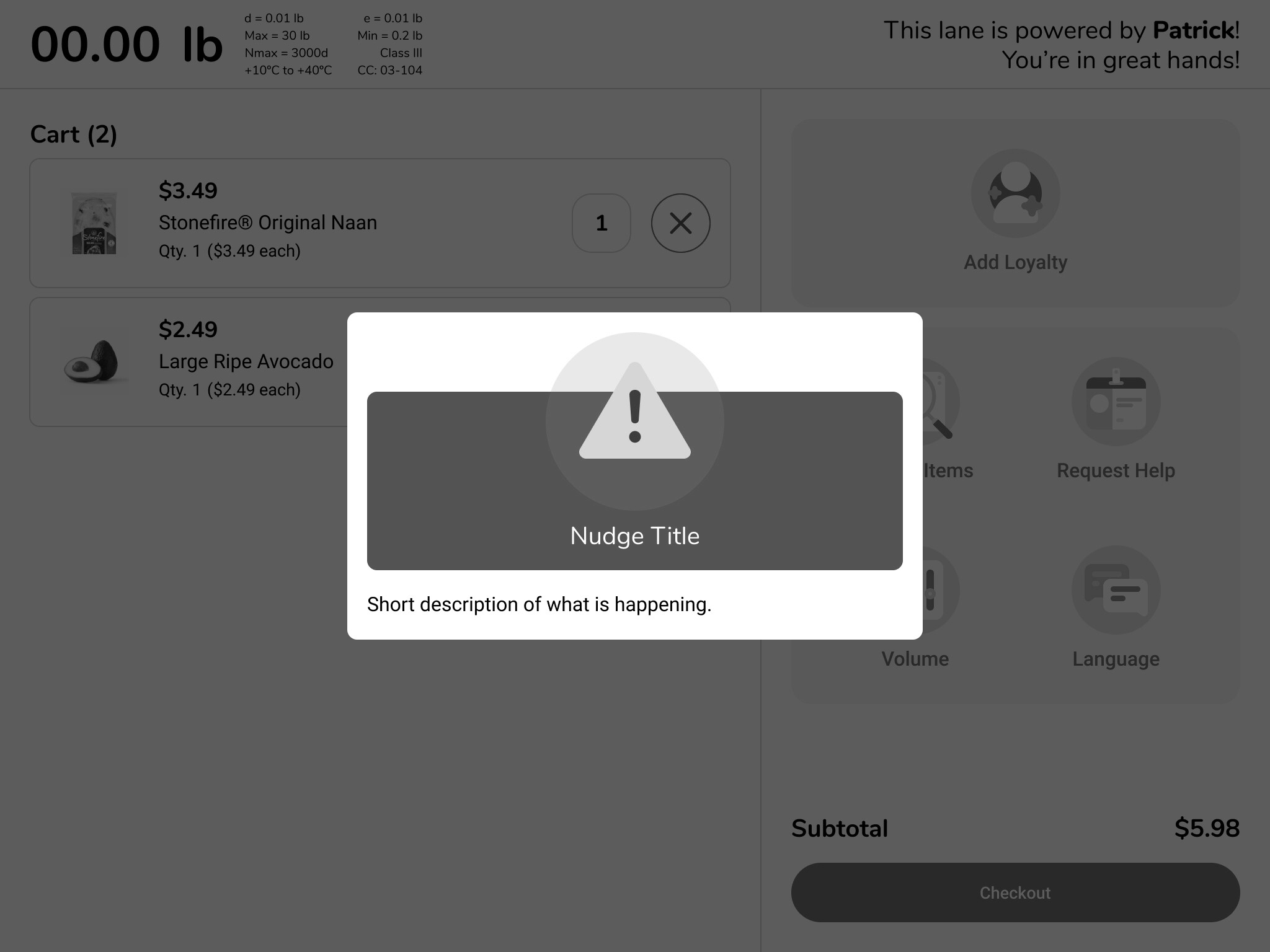
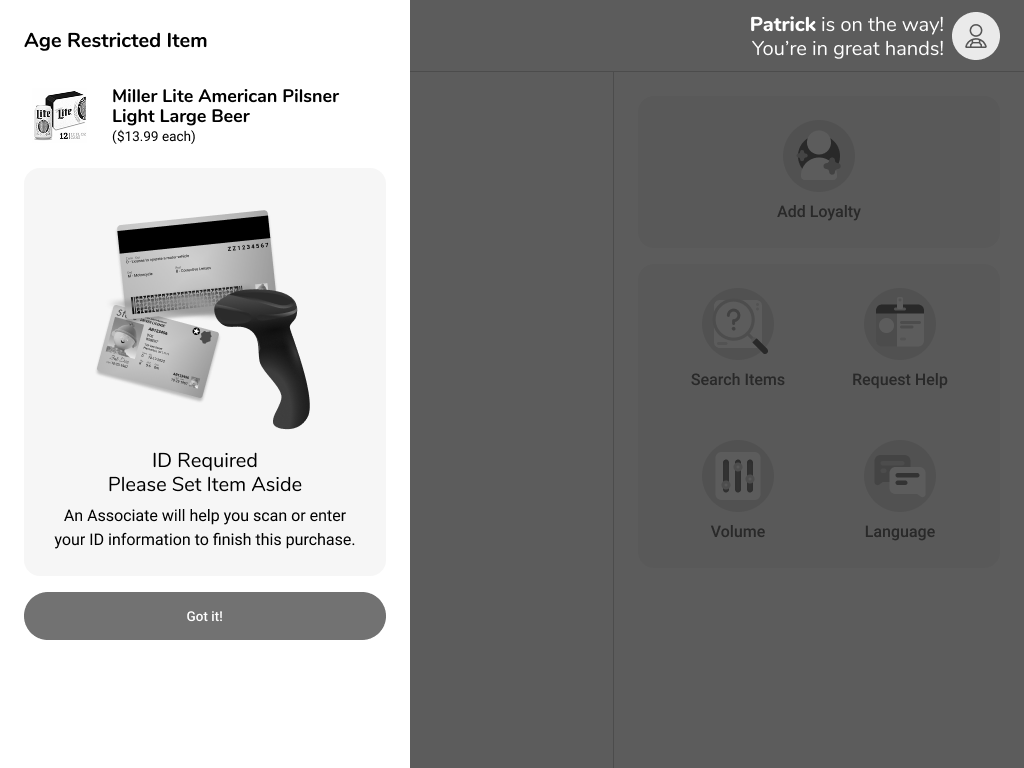
Nudge
Machine provides guidance to allow the customer to complete the necessary resolution. E.g. Weight is missing in the bagging area.
End of Transaction
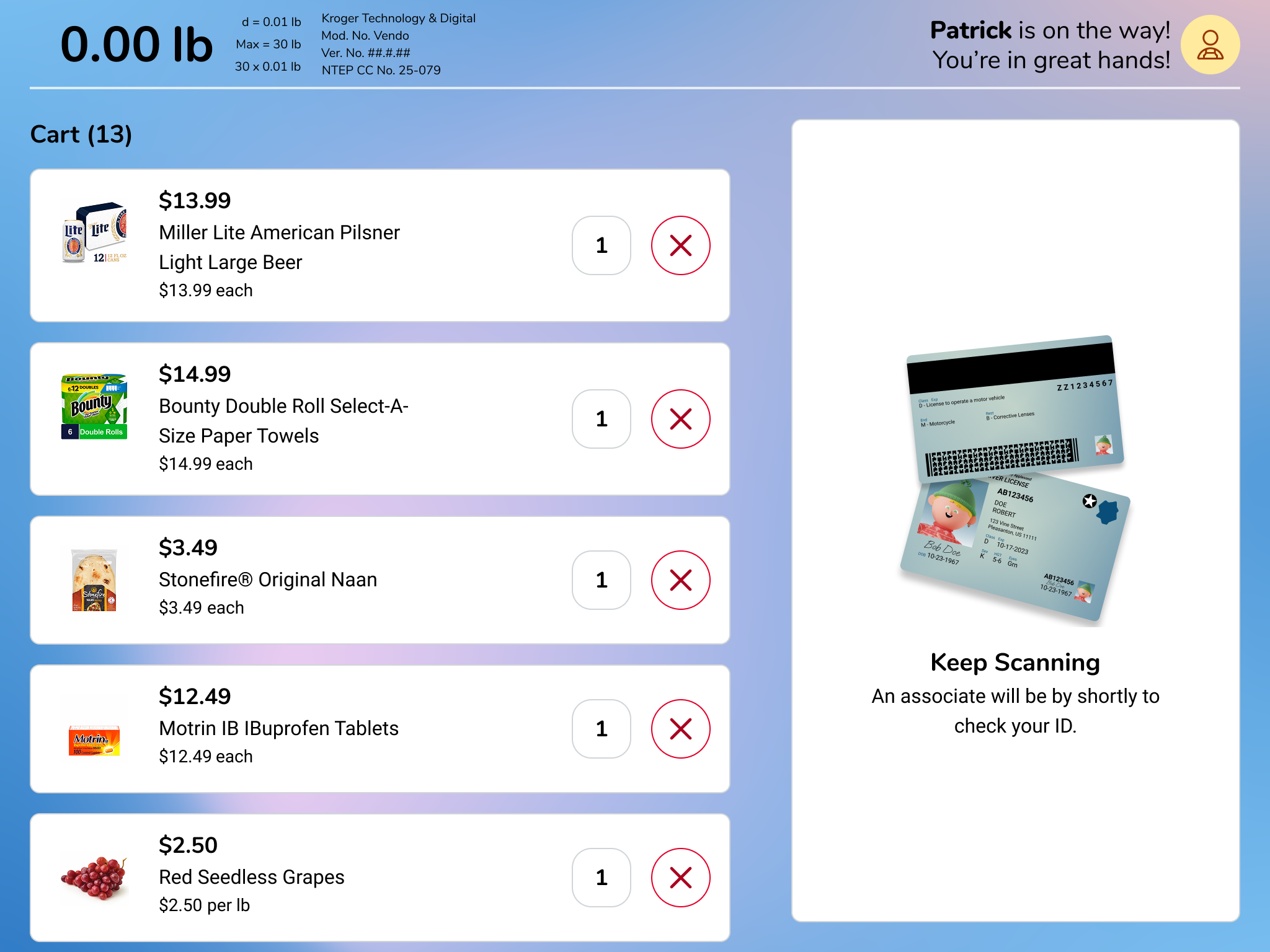
An associate will need to help, but the customer can continue scanning while they wait. E.g. A customer has scanned alcohol.
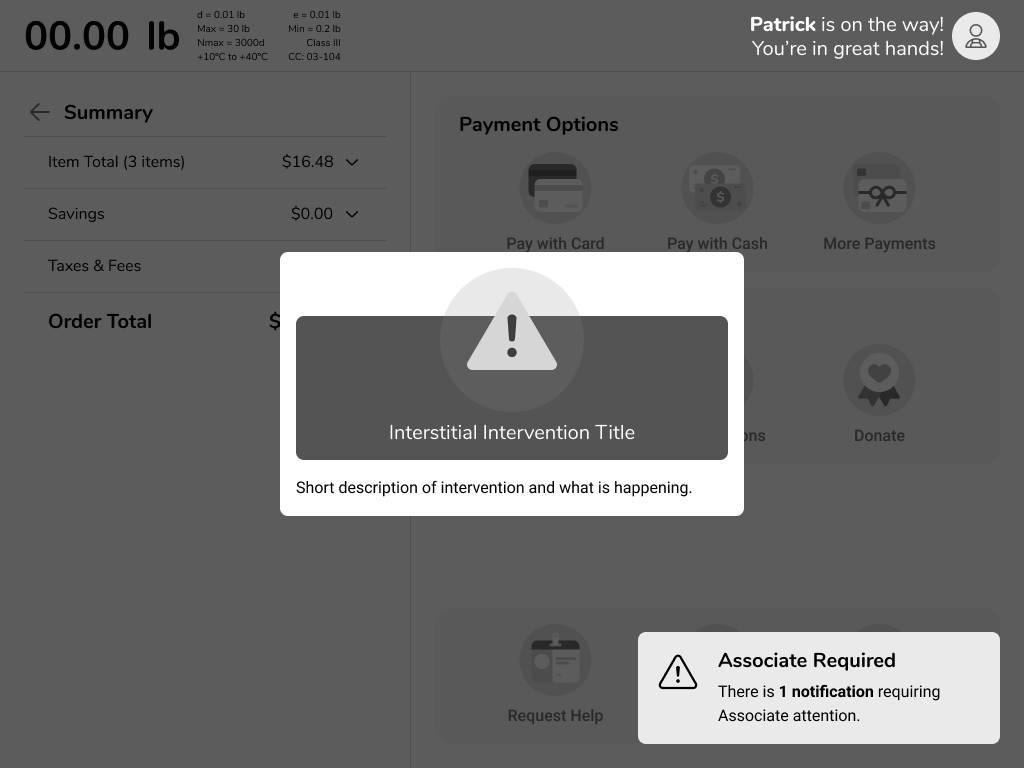
Interstitial
An associate is needed right away, the customer cannot continue until they resolve the issue. E.g. customer is owed change but the cash dispenser is not working.
Other Important Findings
From the surveys and panel findings I uncovered the following how might we’s to prioritize:
*How might we... make messaging and visual ques crystal clear to customers in an overwhelming environment?
*How might we... smoothly transition from one intervention to the next?
*How might we... emphasize the helpfulness of our associates?
Co-designing and Observations: A Visit with Associates
In-Store Visits and Observations
With the insights from customers we conducted in store interviews with associates working in self checkout. I visited three stores for observations and chatted with 9 associates in total.
Associates stressed that additional information on the self checkout terminals themselves would help inform customers and allow them to provide better customer service. Associates provided an additional lens for the physical elements of their role and how they determine who needs help informing the final designs.
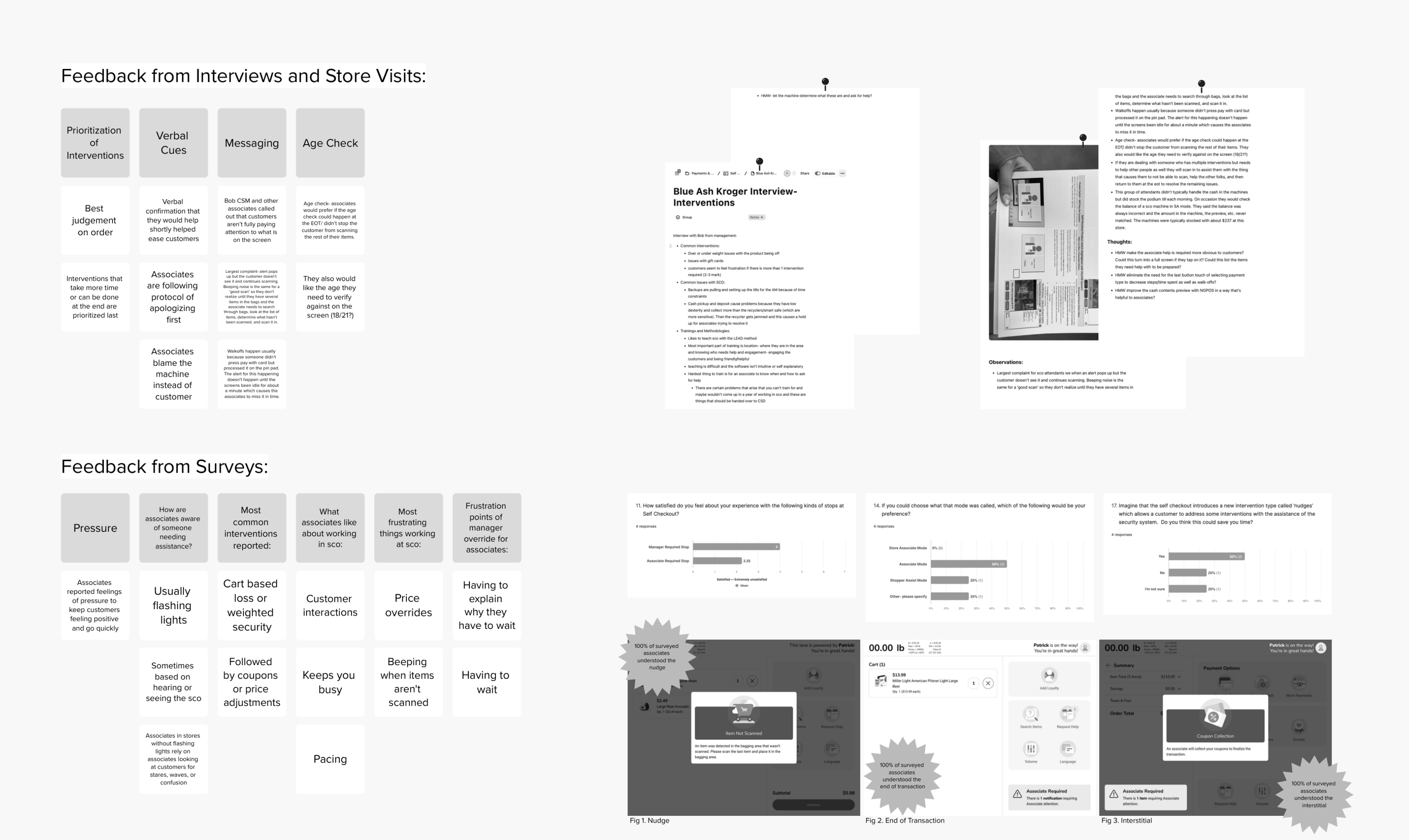
The Self Checkout Environment
Associates often are balancing the needs of multiple customers using visual queues of the overhead flashing lights and eye contact to determine who might need help.
Associates generally liked the fast paced environment and interacting with customers but ran into issues when the self checkout terminal itself didn’t provide either party with enough information for a smooth resolution.
Refinement: Polishing the Format of Interventions by Type
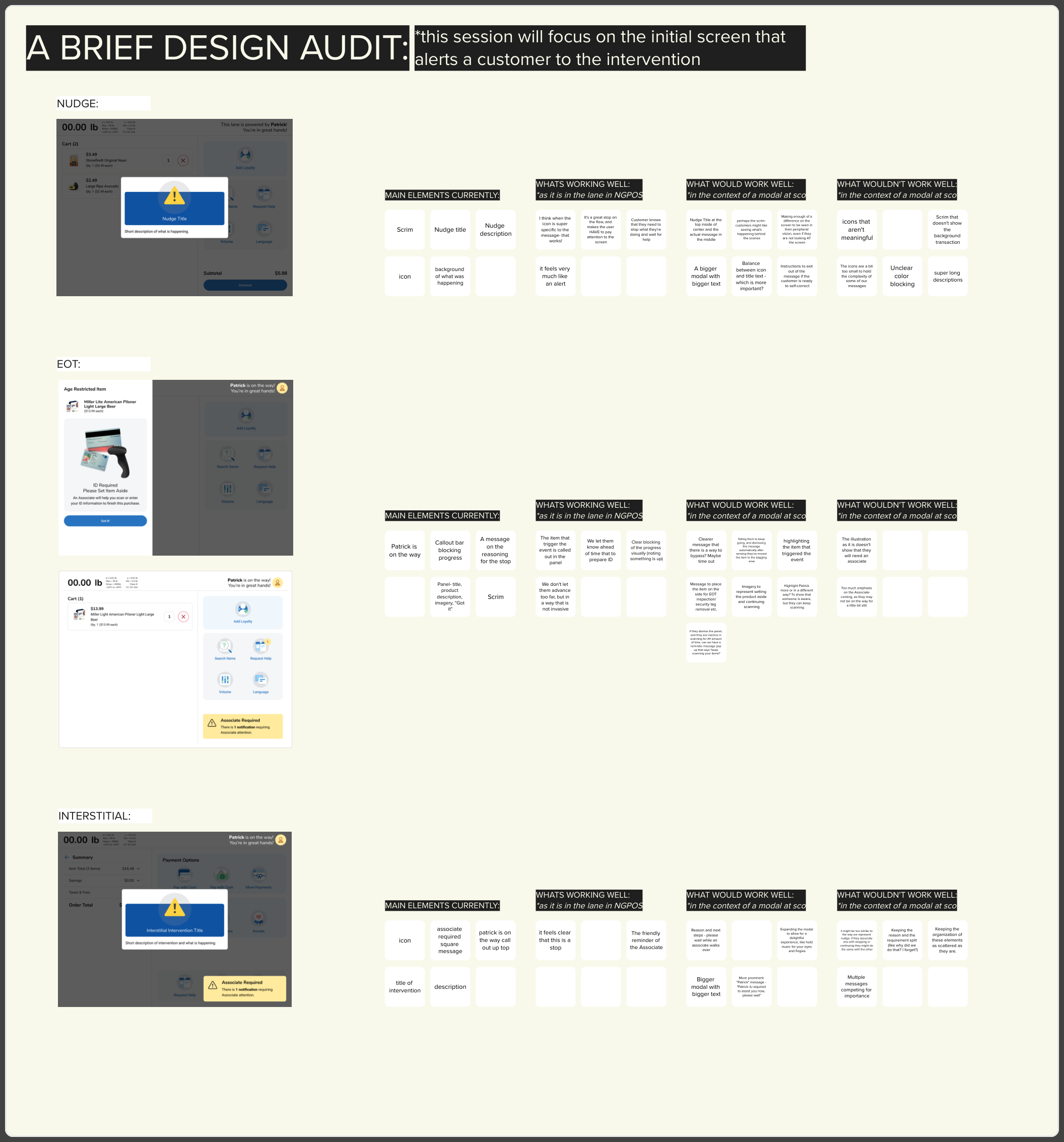
*Reviewing what makes up the current components in a version of rose, thorn, bud
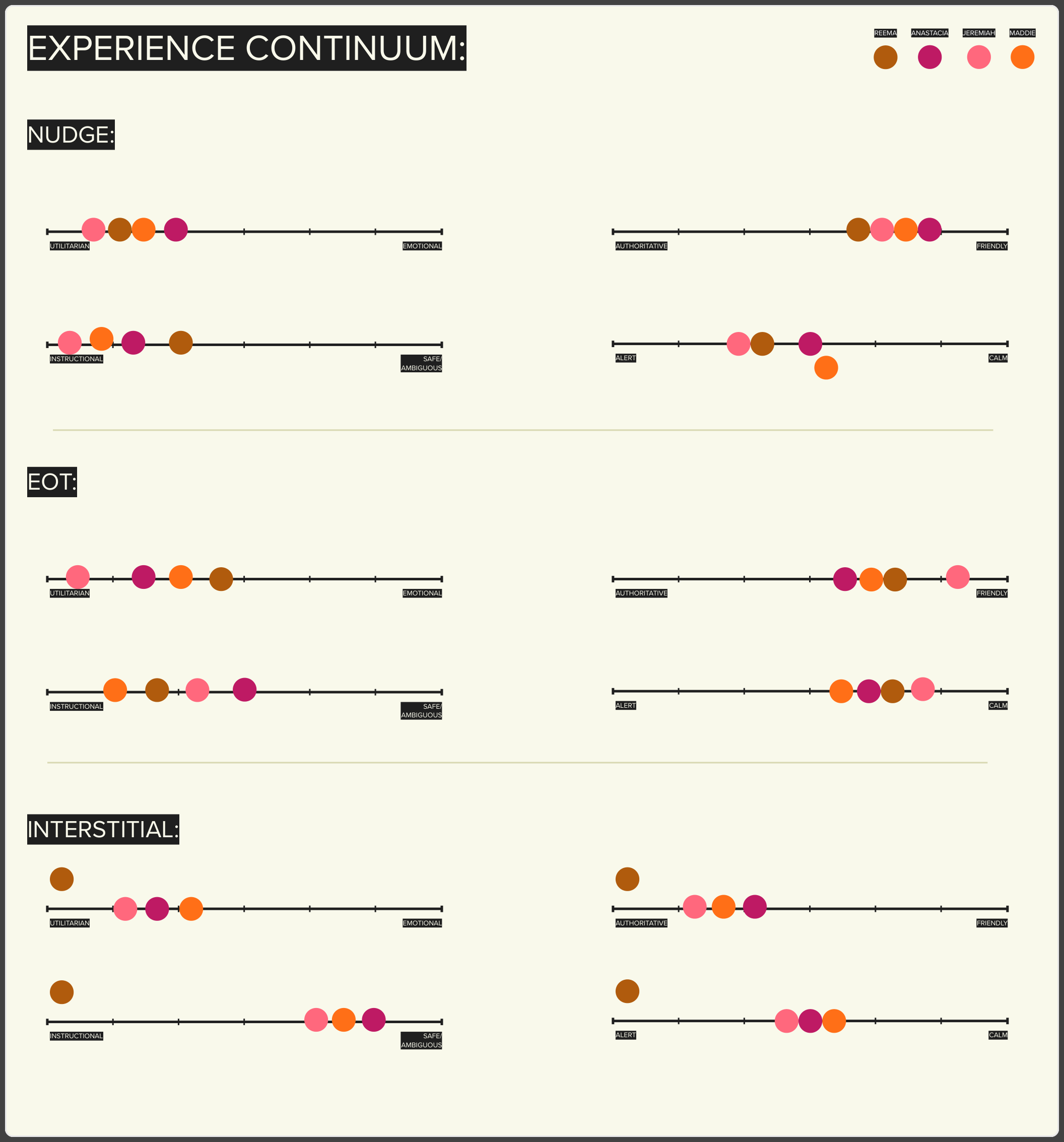
*Ranking what we believe the three intervention types should feel like on two continuum types
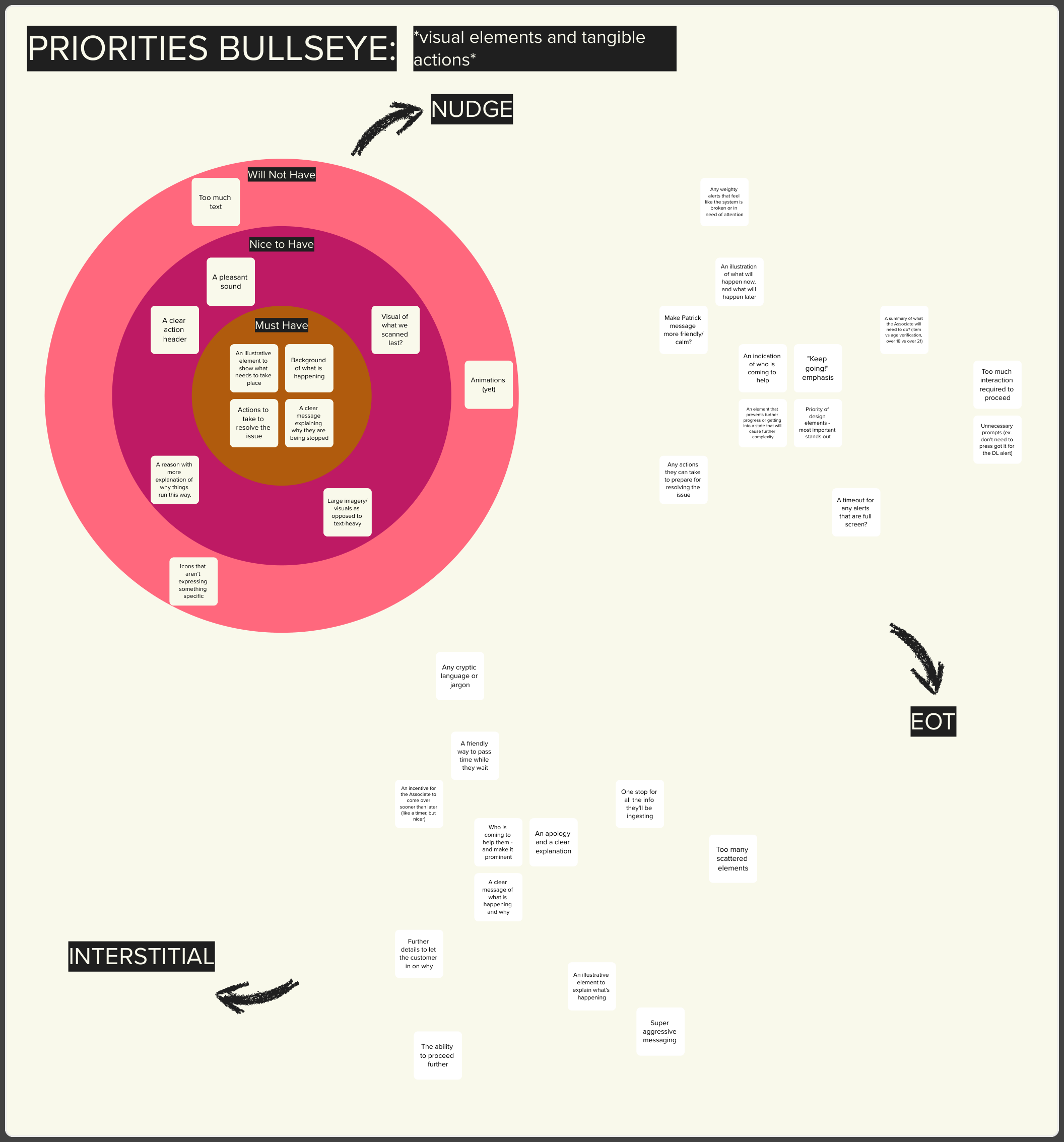
*Final sketches voted on and ready to convert into final components
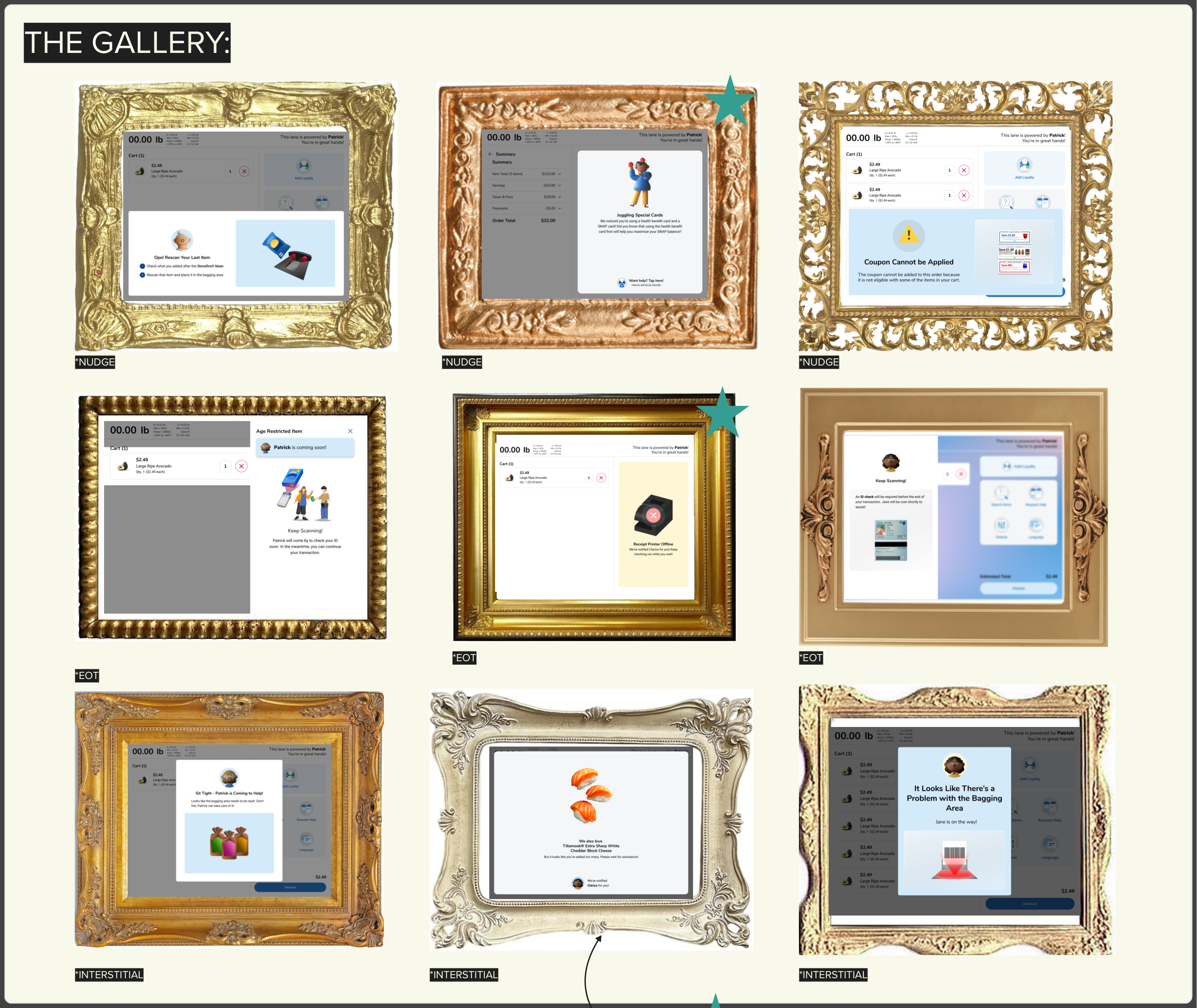
*Final sketches voted on and ready to convert into final components
Stakeholder Alignment: Revisiting the Intervention Scenarios
Reviewing the Intervention Types
After creating prototypes I wanted to check back in with our stakeholders to determine how the 80 plus interventions would be sorted into the new types.
Over the course of two sessions we met with retail ops and our technical partners to ensure that both parties felt comfortable with the interventions being sorted into the new categories. We showed examples and mapped our findings as a group in Mural.
Mapping, Revising, and Consolidating Intervention Types
Revisiting the interventions by type also presented us with the opportunity to pair back any interventions that we felt were unnecessary or unhelpful. We also consolidated interventions where it made sense, reducing the overall volume by 50%.
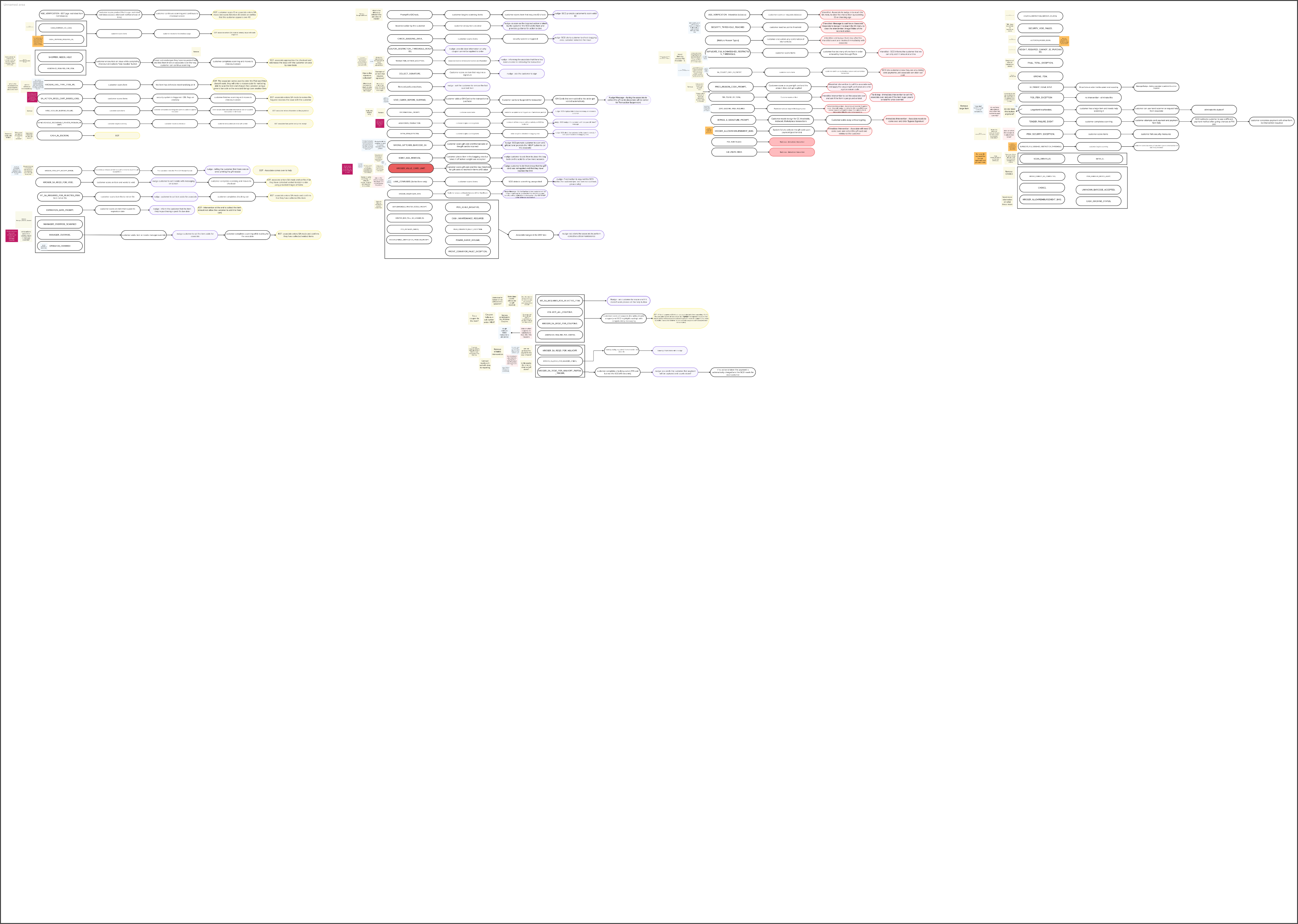
*Interventions sorting map, blurred for security purposes
Refreshed Interventions: The Final Concepts
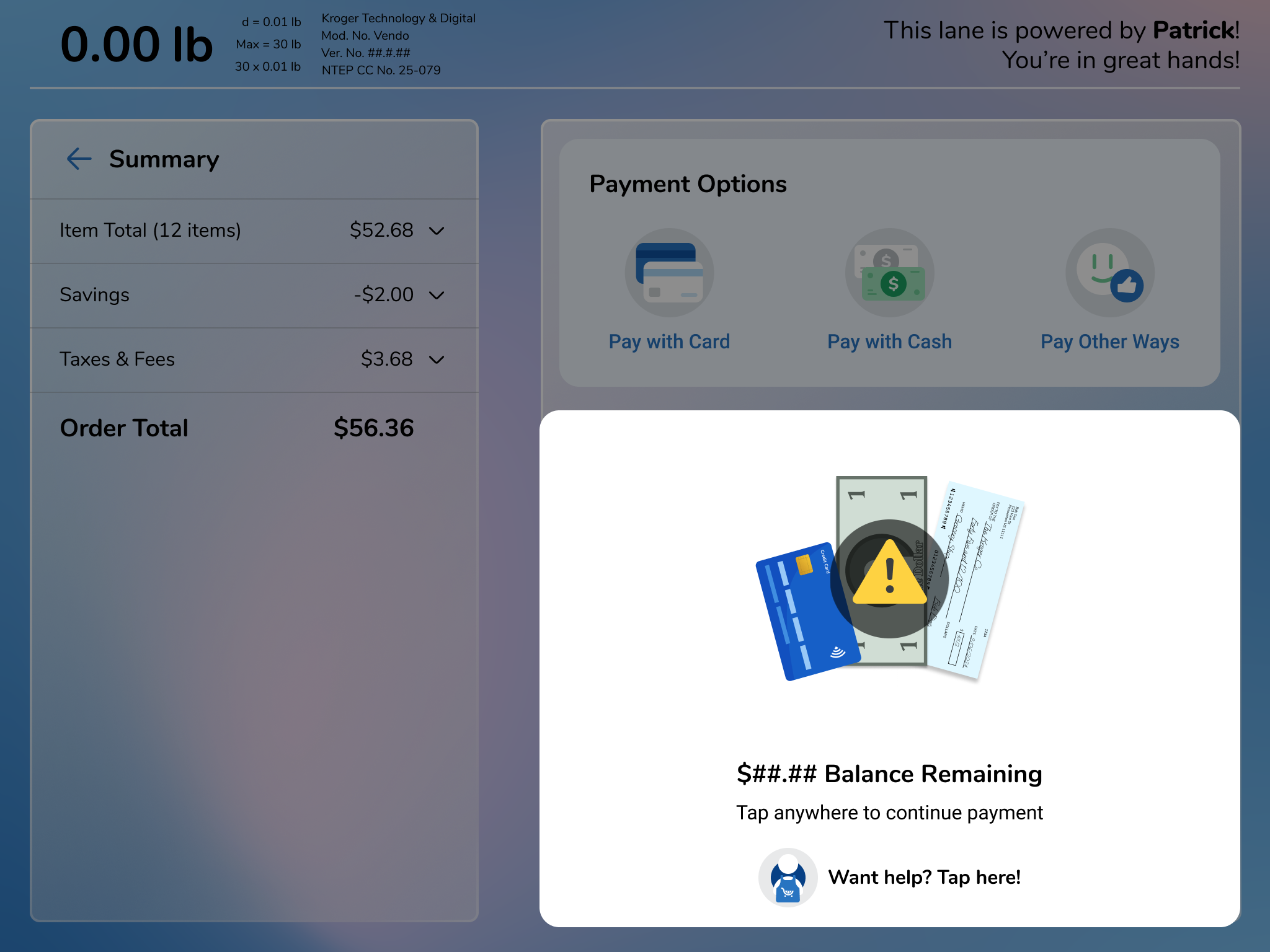
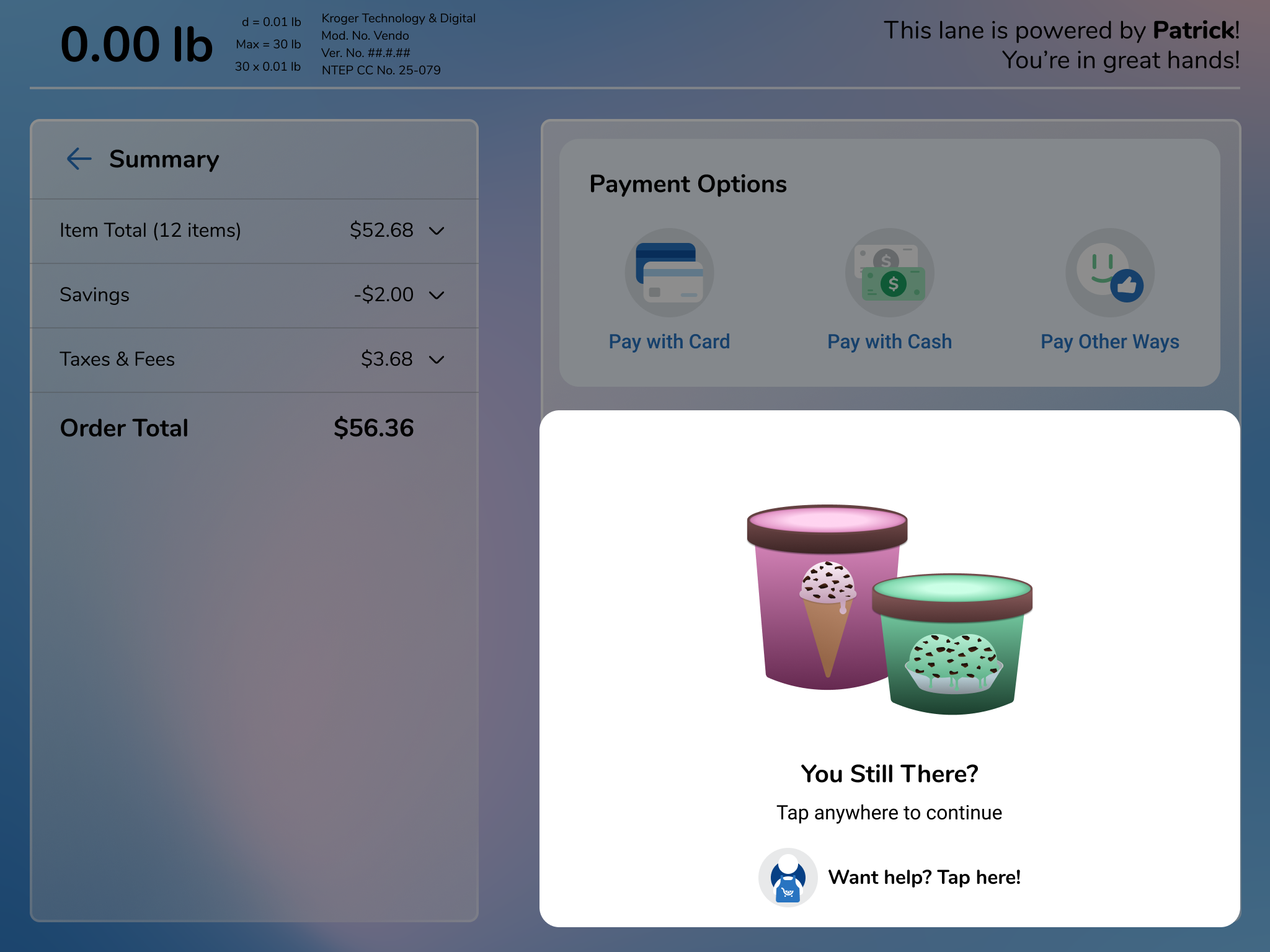
Nudges
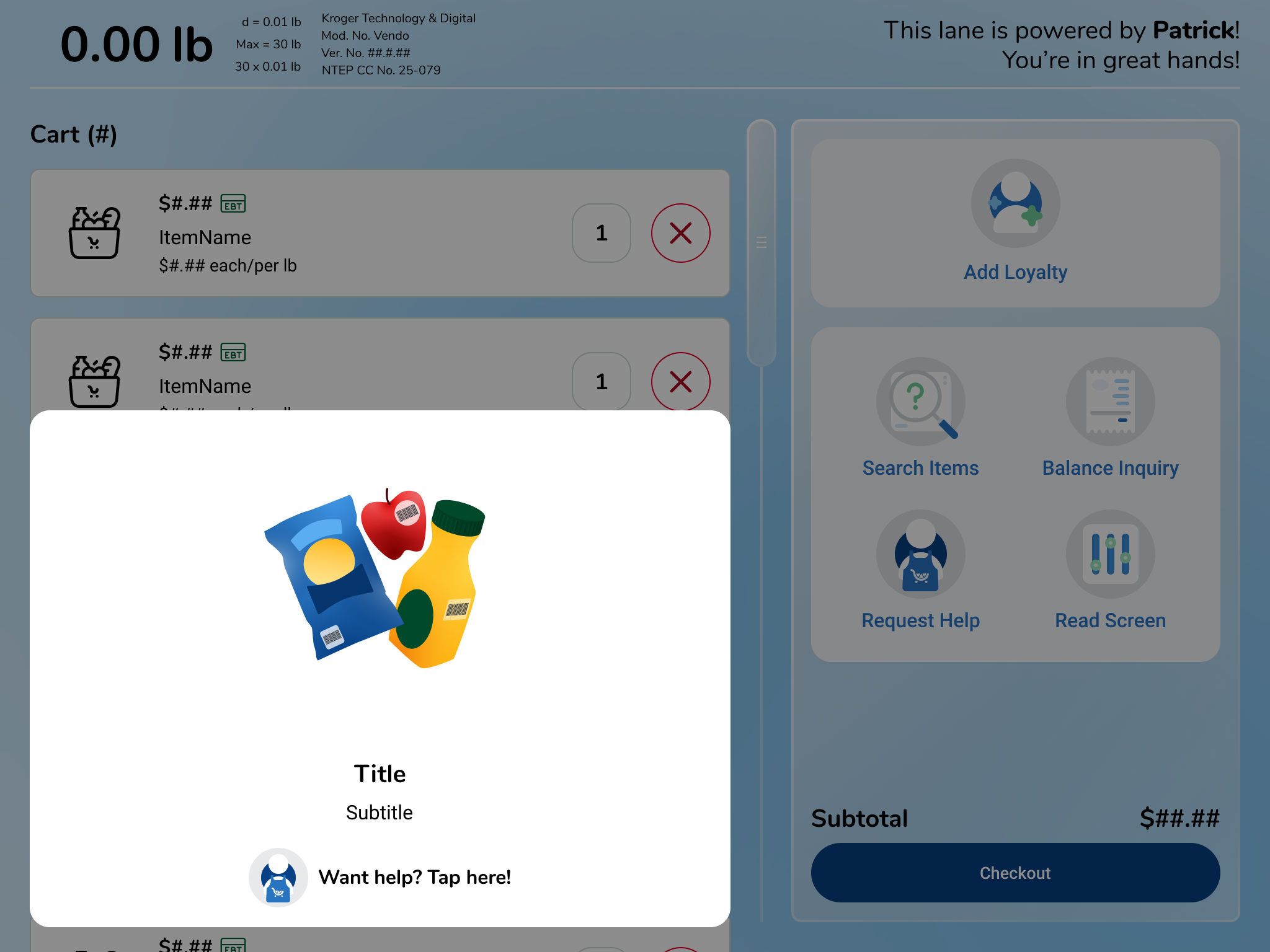
- Allow the users to see the most important information including what they last scanned
- Automatically dismiss when the customer resolved them
- Give a description and an illustration of what happened
- Allow the customer to request help
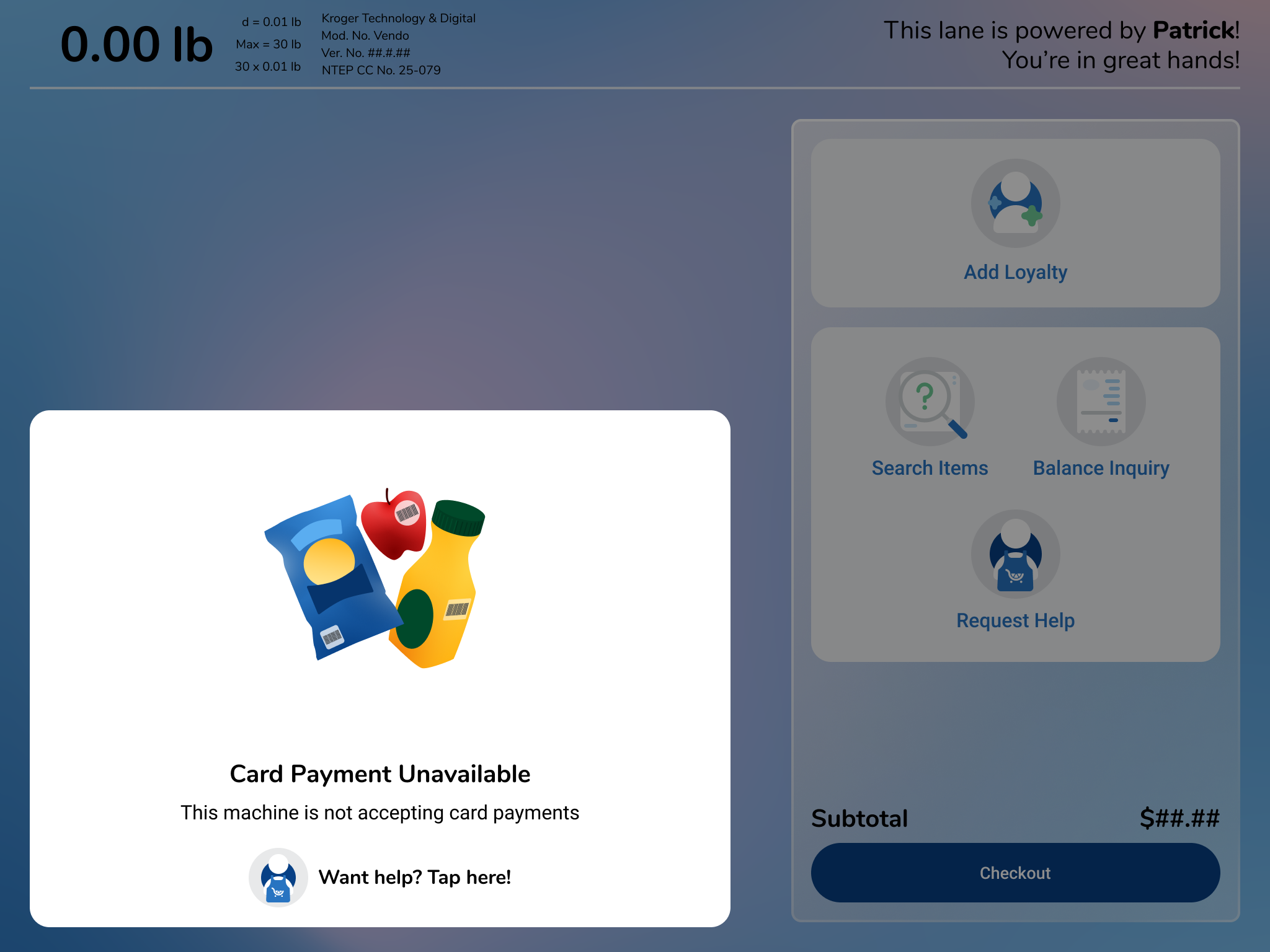
*Only cash payment is available
*Payment due timeout
*General timeout
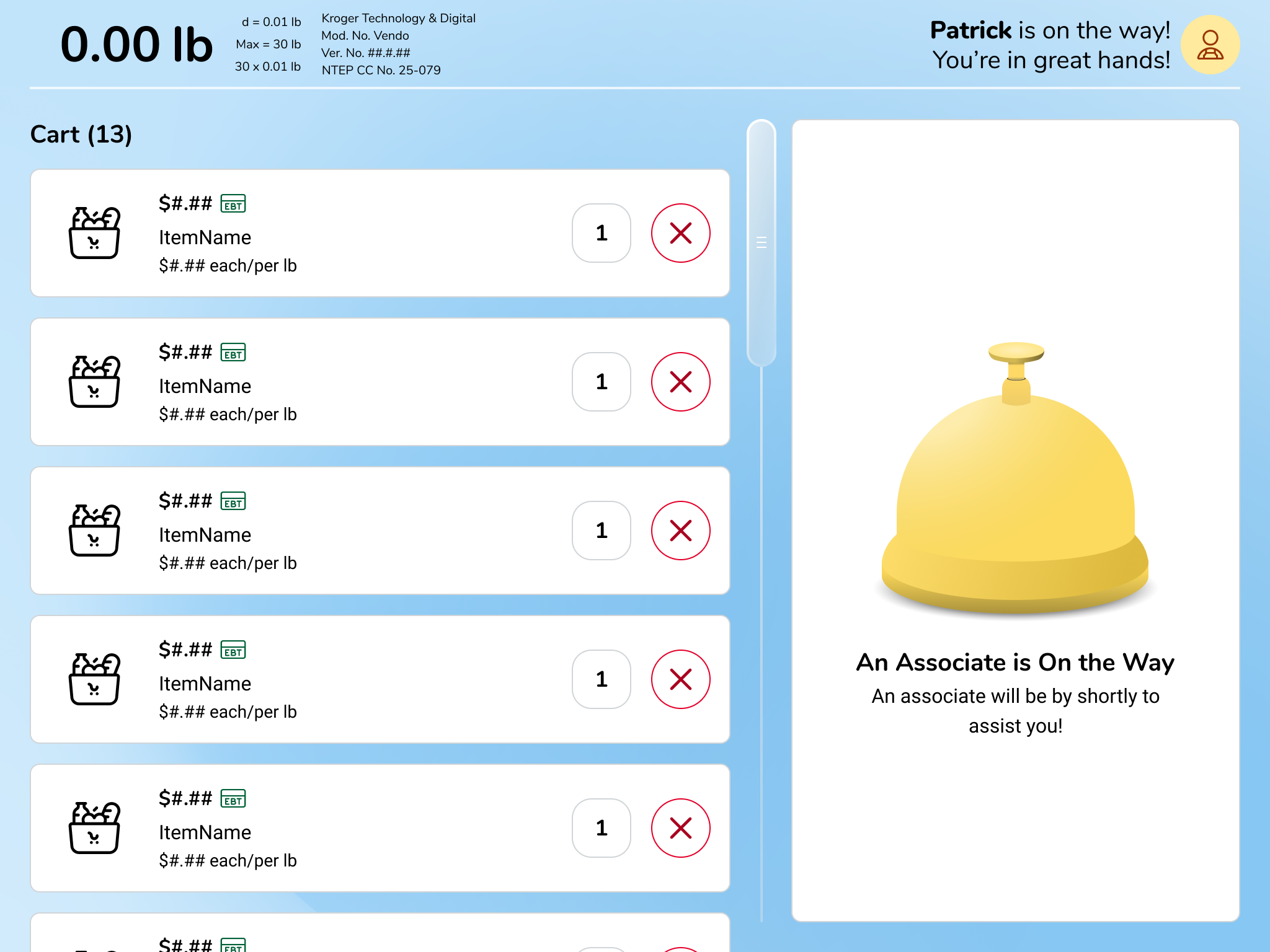
End of Transaction
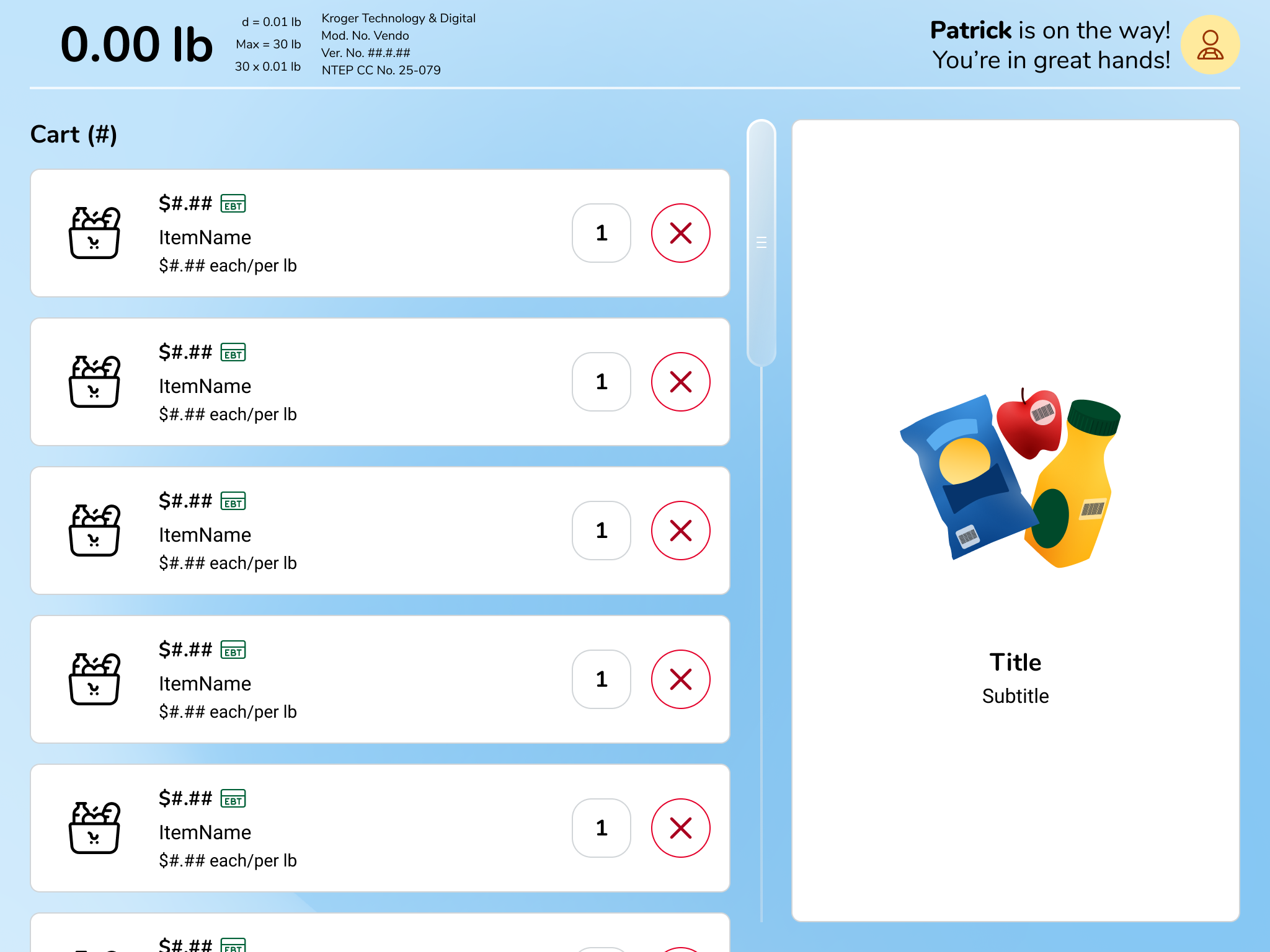
- Allow the users to see the most important information including what they last scanned or additional options
- Prevent the customer from moving forward in the flow without being addressed
- Give a description and an illustration of what happened
- Collapse to encourage the customer to keep scanning
- Show that the associate is on the way
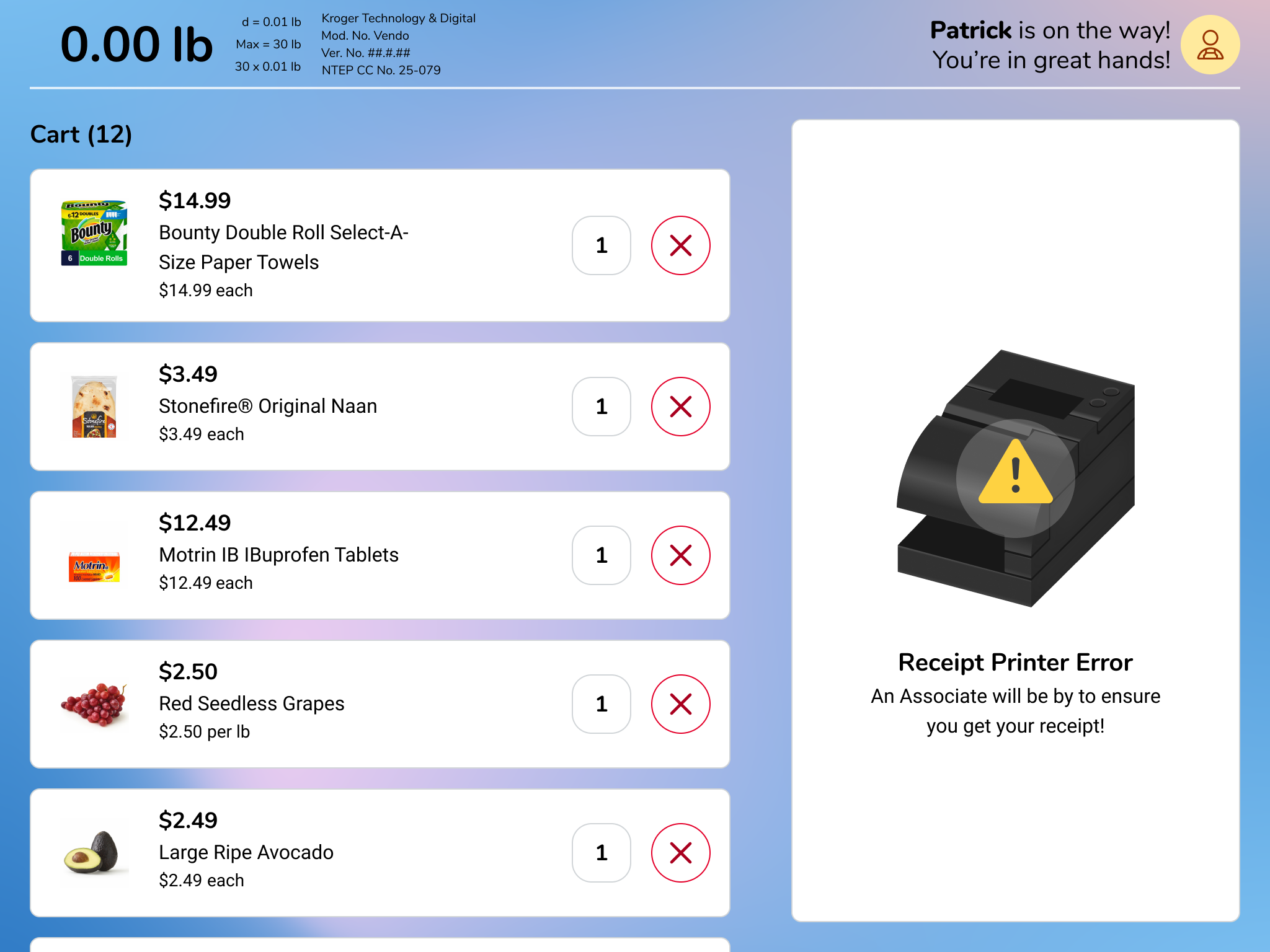
Interstitial
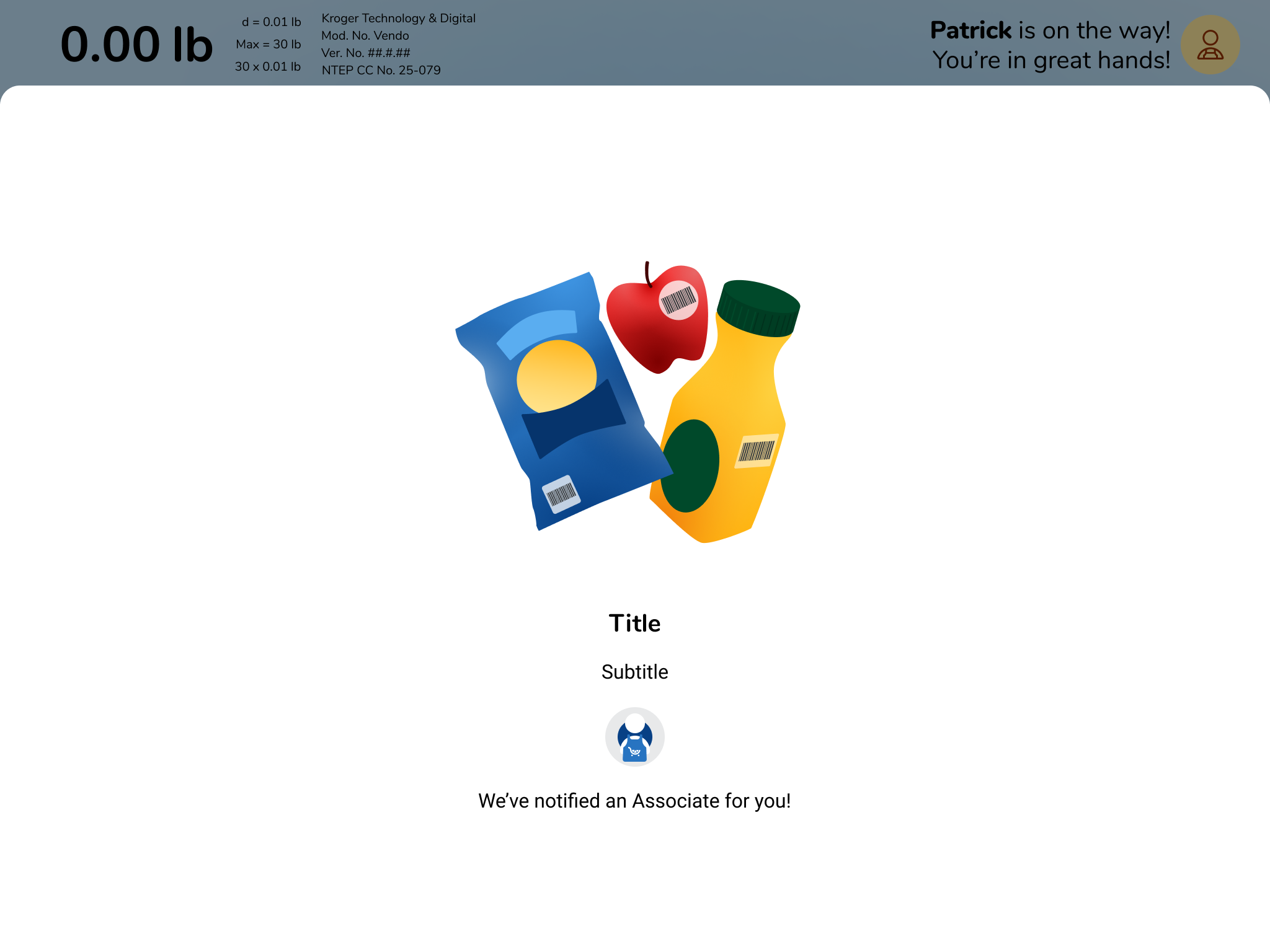
- Take over the entire screen to prevent the customer from doing anything prior to being resolved by an associate
- Give a description and an illustration of what happened
- Show that the associate is on the way
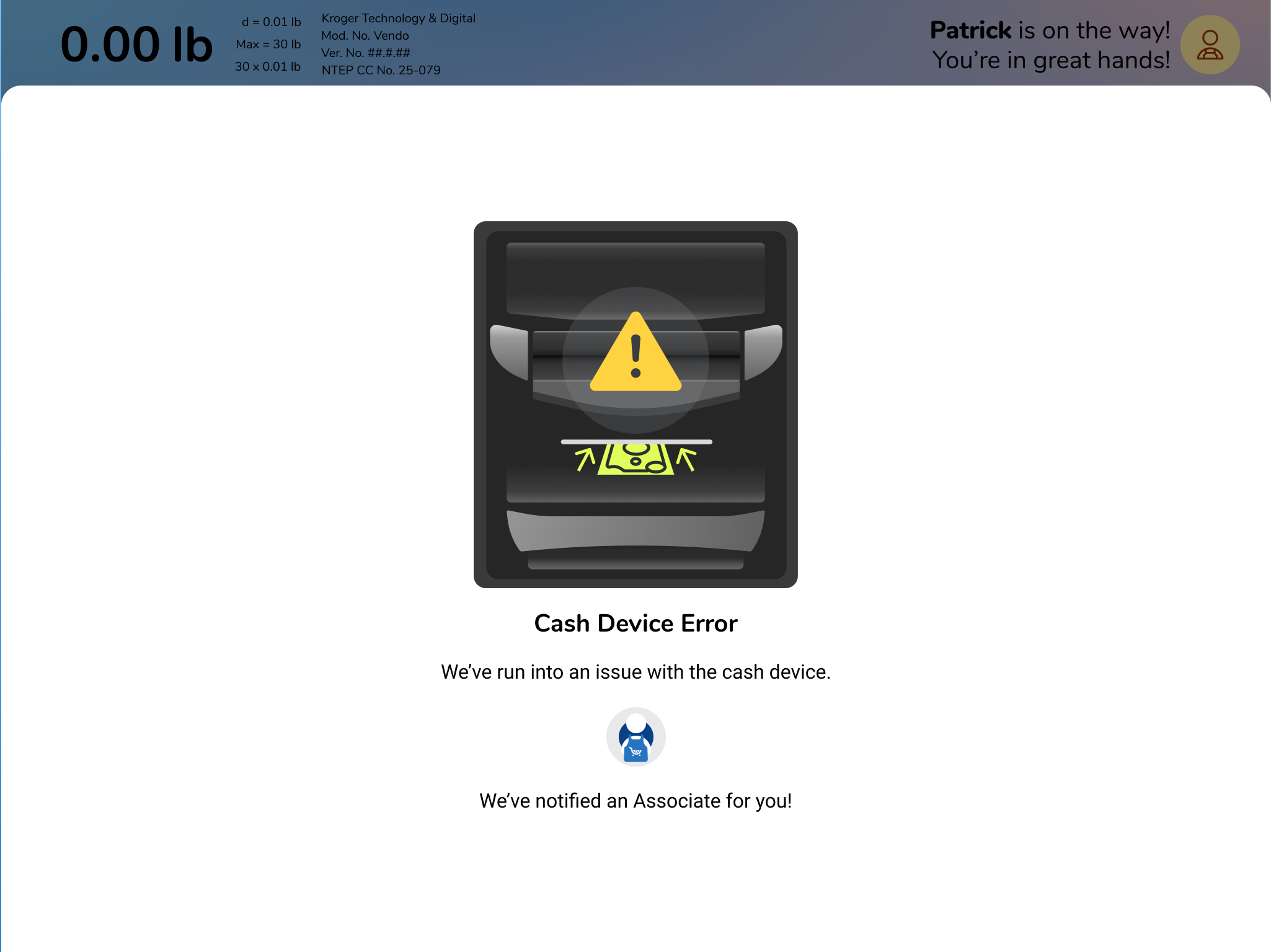
*Unable to dispense cash
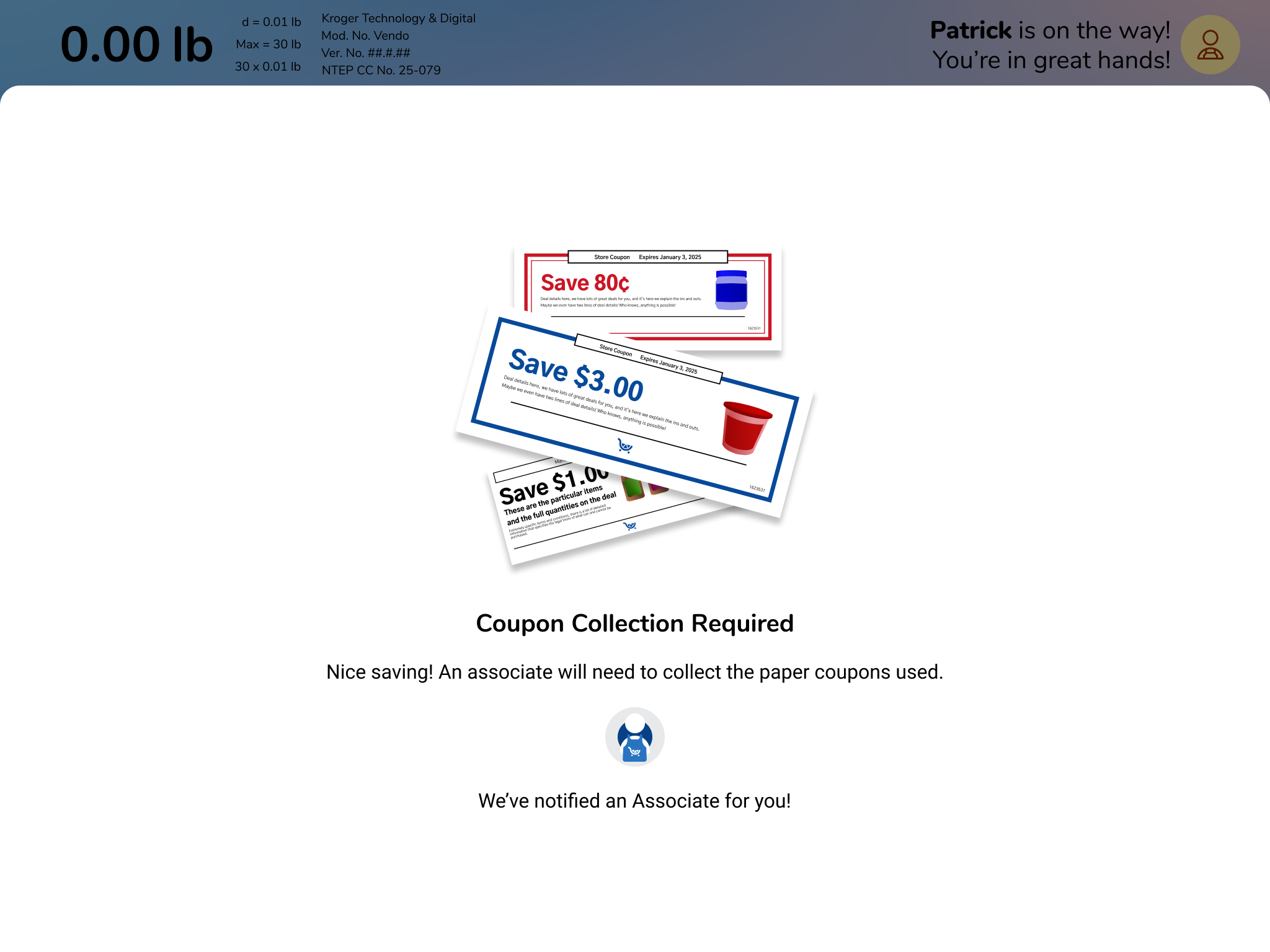
*Associate must collect coupons
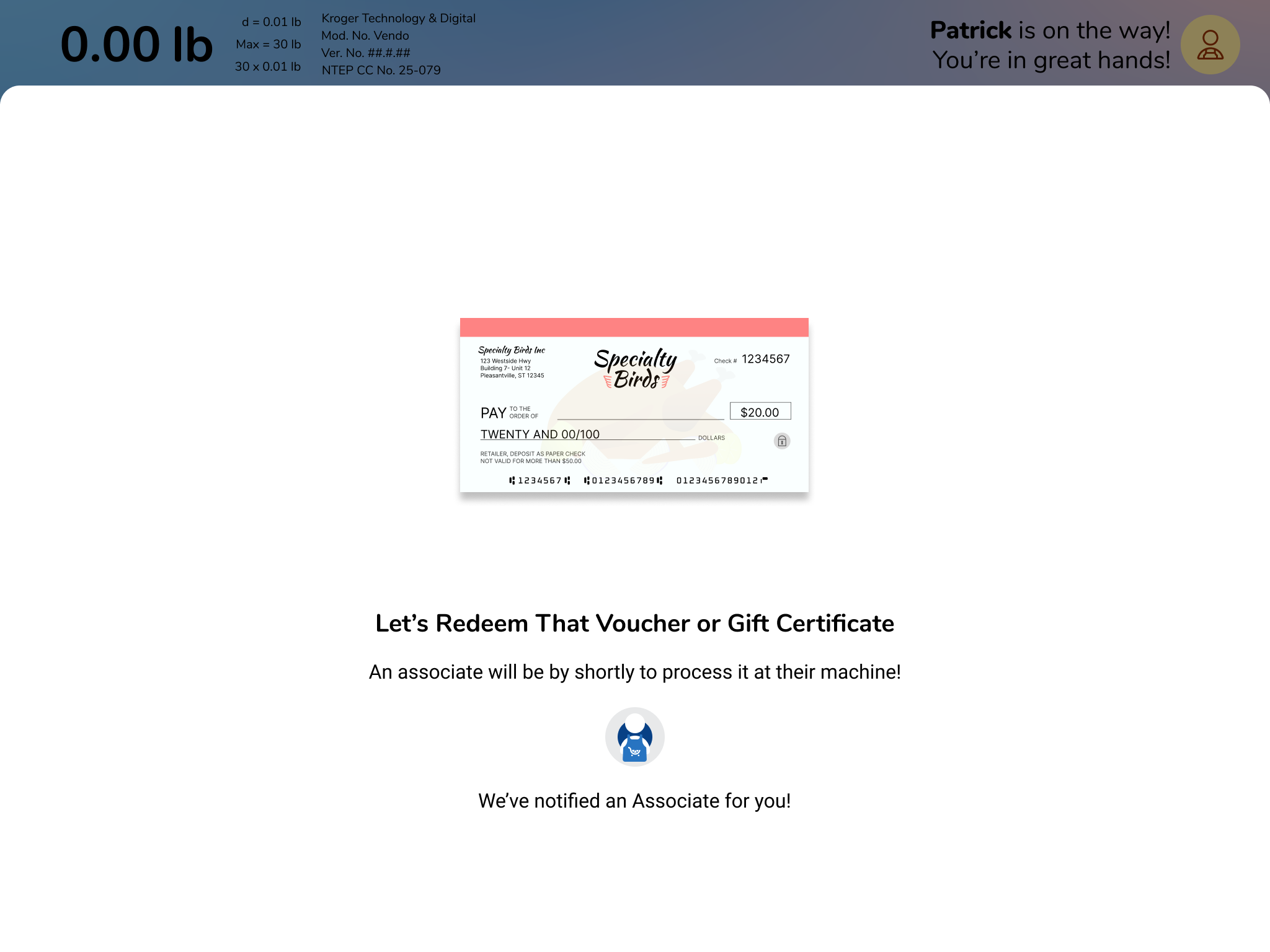
*Transfer required for voucher
Resolving Interventions: The Associate’s Experience
Associate Interactions
Associates identified the following as their top priorities that needed to be included in the final design for resolutions:
- Ability to quickly see what went wrong if additional details are necessary
- Ability to scan information and make decisions quickly
- Ability to easily log in to resolve the intervention
End of Transaction Intervention Resolution
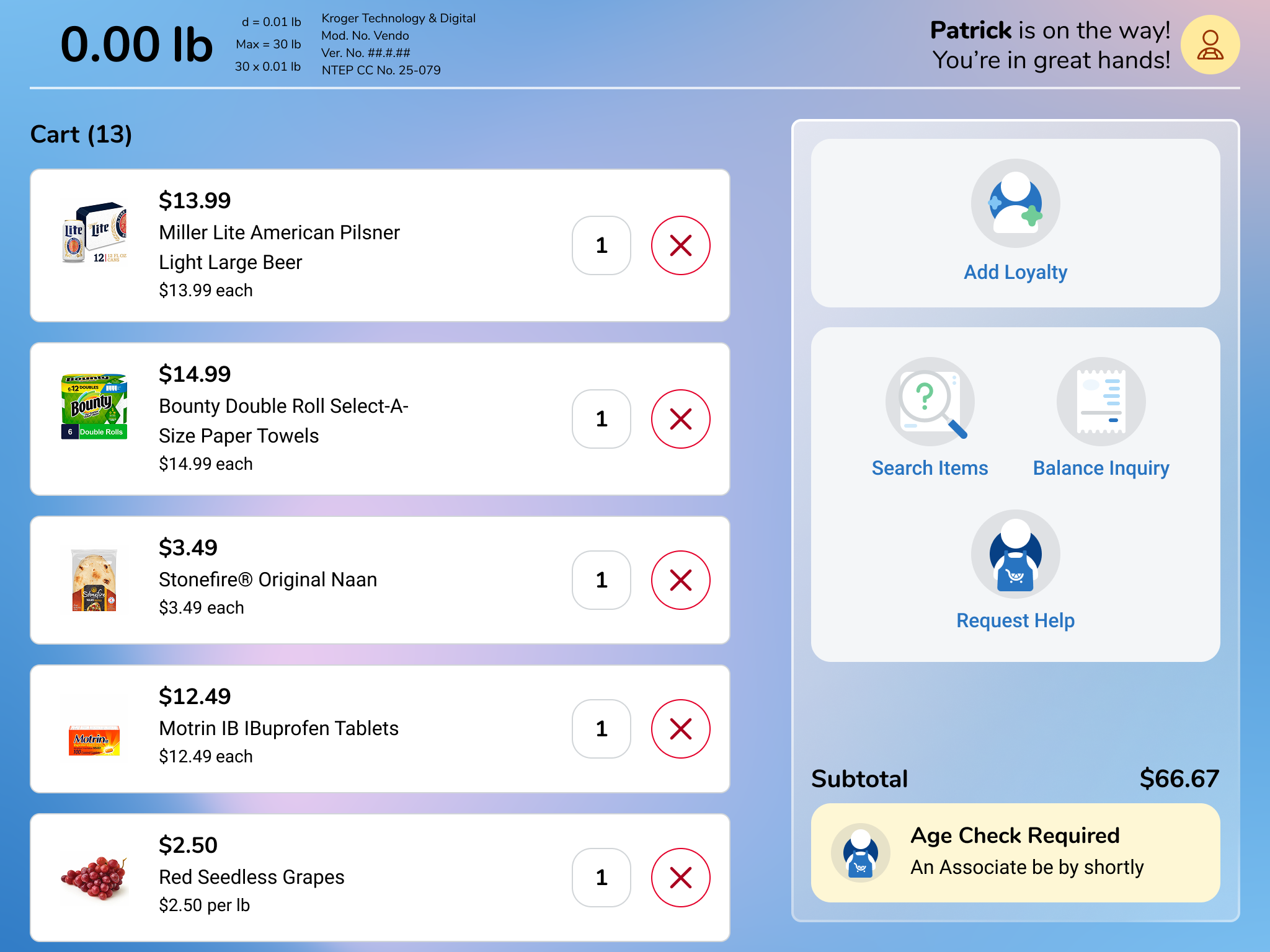
*Scanning the age check item, showing the panel, panel automatically collapsing
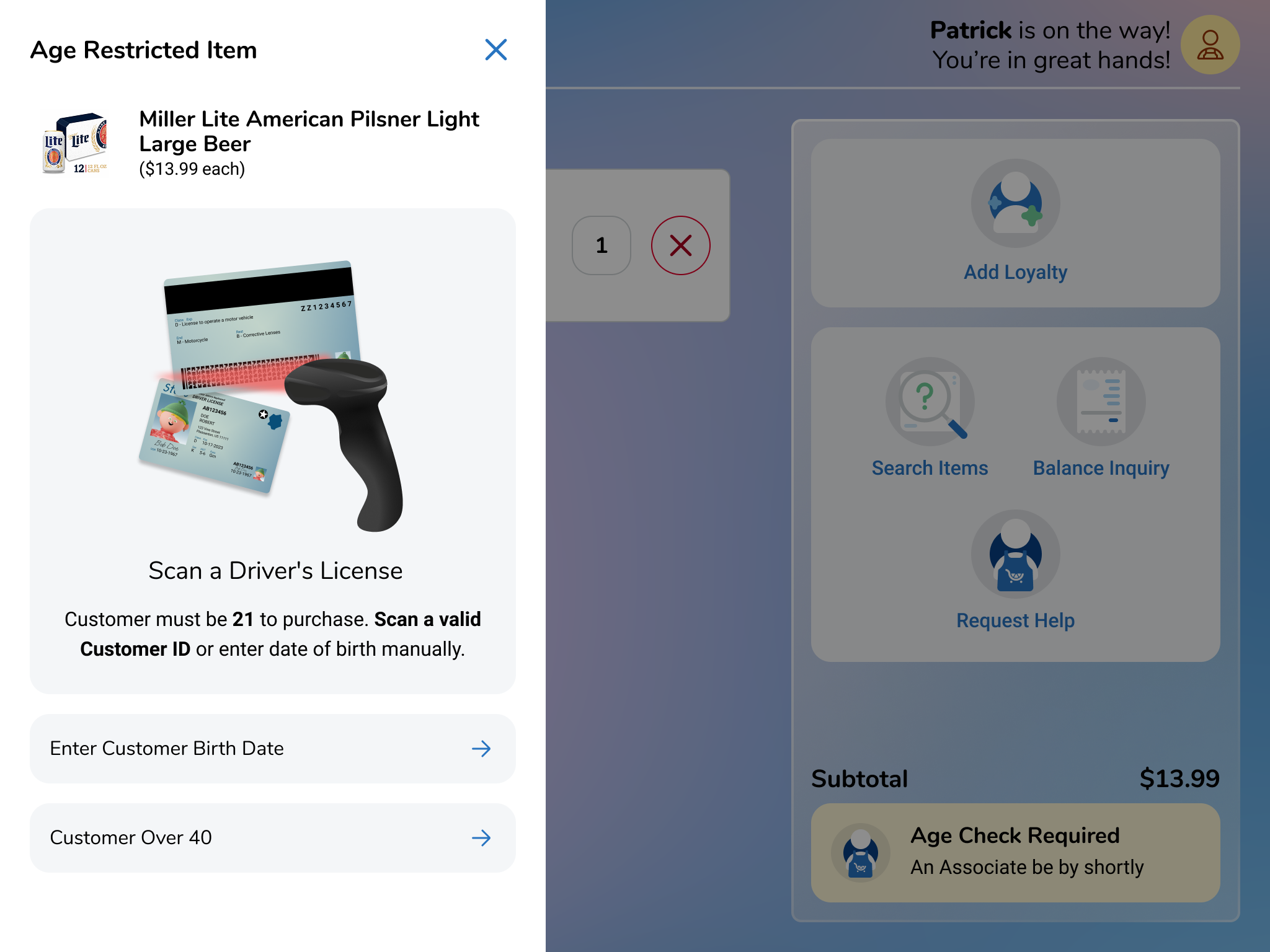
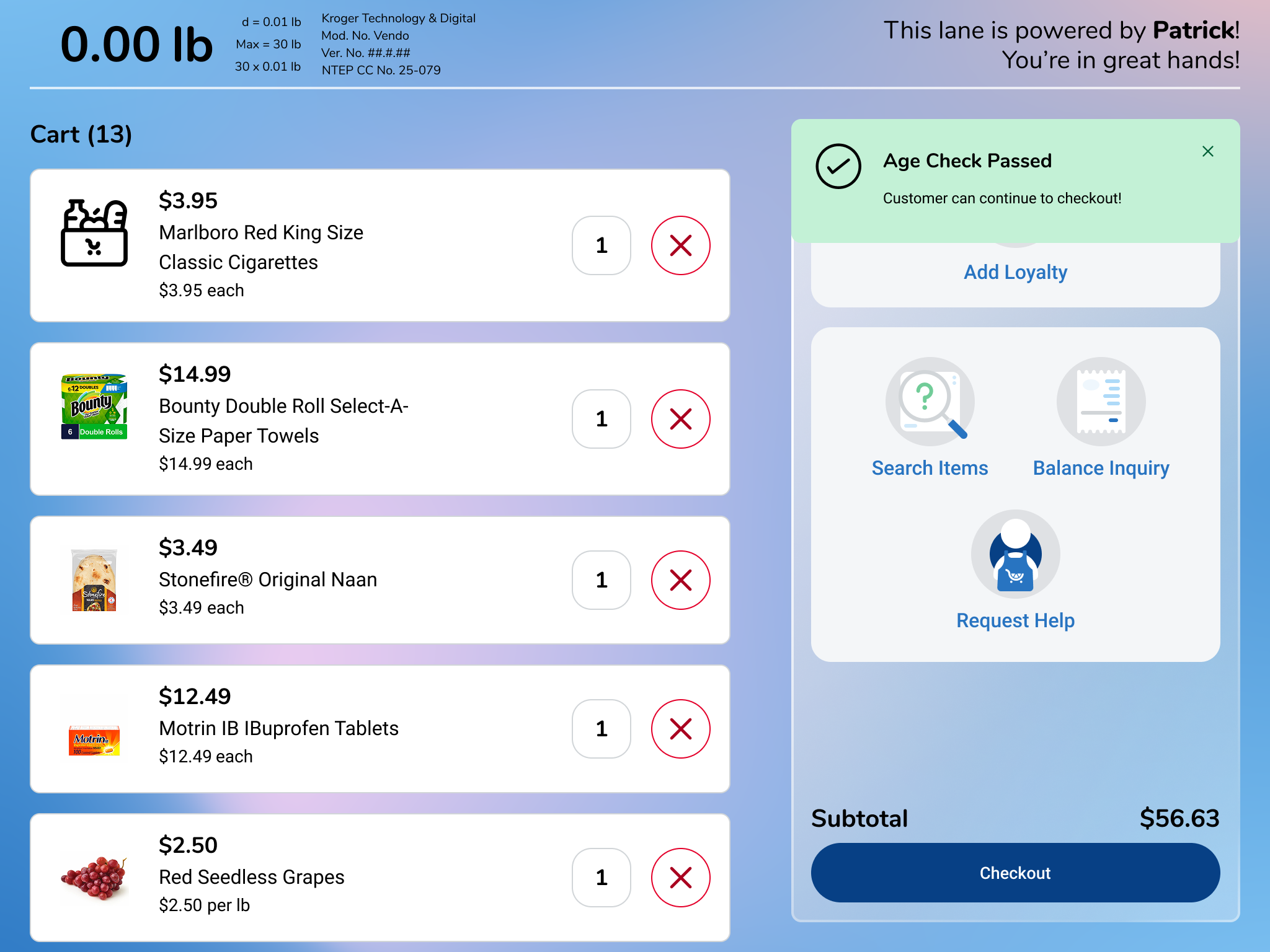
*Associate badges in and scans the customers drivers license dismissing the intervention
End of Transaction Intervention Resolution
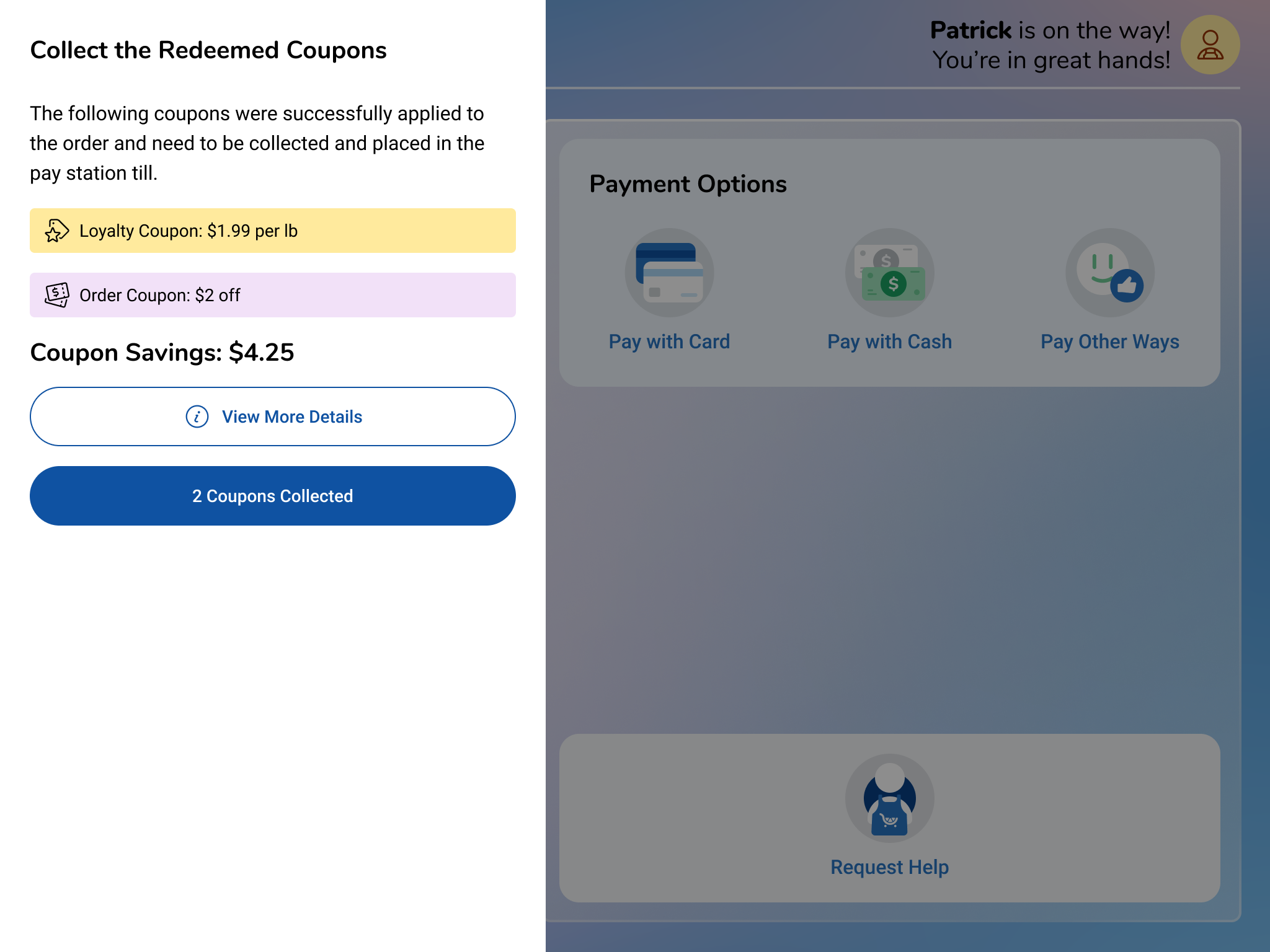
*Scanning in to collect coupons that were successfully applied to the order